AI in HCM leverages artificial intelligence technologies like machine learning and predictive analytics within human capital management software to automate and optimize HR processes, from recruitment to employee engagement.
In 2026, AI-enabled HCM solutions are a strategic must-have for organizations aiming to boost productivity, reduce HR costs, and enhance workforce experience.
The global AI in HR market is projected to grow from USD 8.16 billion in 2025 to over USD 30.7 billion by 2034, driven by adoption of AI-powered HCM solutions, predictive analytics, and automated HR workflows.
Currently, 73% of organizations use AI capabilities within their human capital management software for workforce planning.
Despite these gains, traditional HR still struggles with manual tasks and slow decision-making. This blog explores top AI use cases, core features, and future trends transforming human-capital-management-software development in 2026.
Why AI in HCM Matters in 2026
In 2026, AI in HCM is a foundational pillar of modern HR transformation. Organizations are shifting toward intelligent AI-driven HCM platforms that enable predictive, data-driven workforce management.
As hybrid work expands and talent shortages intensify, businesses require scalable HCM solutions that integrate recruitment, payroll, performance, and analytics. AI delivers real-time insights and automation across core HR functions.
Rising employee expectations demand personalization and transparency, which modern AI-powered HCM solutions deliver through adaptive workflows and contextual intelligence.
Market Adoption Trends & ROI Projections
The AI in HR market continues double-digit growth due to enterprise adoption of cloud-based top HCM software platforms embedded with AI capabilities.
Organizations implementing AI-powered HCM solutions report measurable ROI through:
- Reduced time-to-hire
- Lower attrition rates
- Faster HR case resolution
- Improved productivity
Forward-thinking Software Developers are embedding predictive analytics, automation engines, and generative AI modules directly into human capital management software to drive measurable business impact.
Rise of Agentic HR and Intelligent HRIS
A major evolution in 2026 is the emergence of Agentic HR AI systems that not only provide insights but autonomously recommend and execute HR actions. Unlike traditional dashboards, agentic AI within HCM platforms can:
- Proactively flag attrition risks and suggest retention strategies
- Recommend compensation adjustments based on market data
- Automatically trigger learning programs for skill gaps
- Optimize workforce allocation in real time
Modern AI-powered HRIS platforms are evolving into intelligent ecosystems that integrate recruitment, payroll, learning, performance, and analytics into a unified decision-making engine. This reduces data silos and enables continuous, real-time HR optimization.
Key Features of AI in HCM
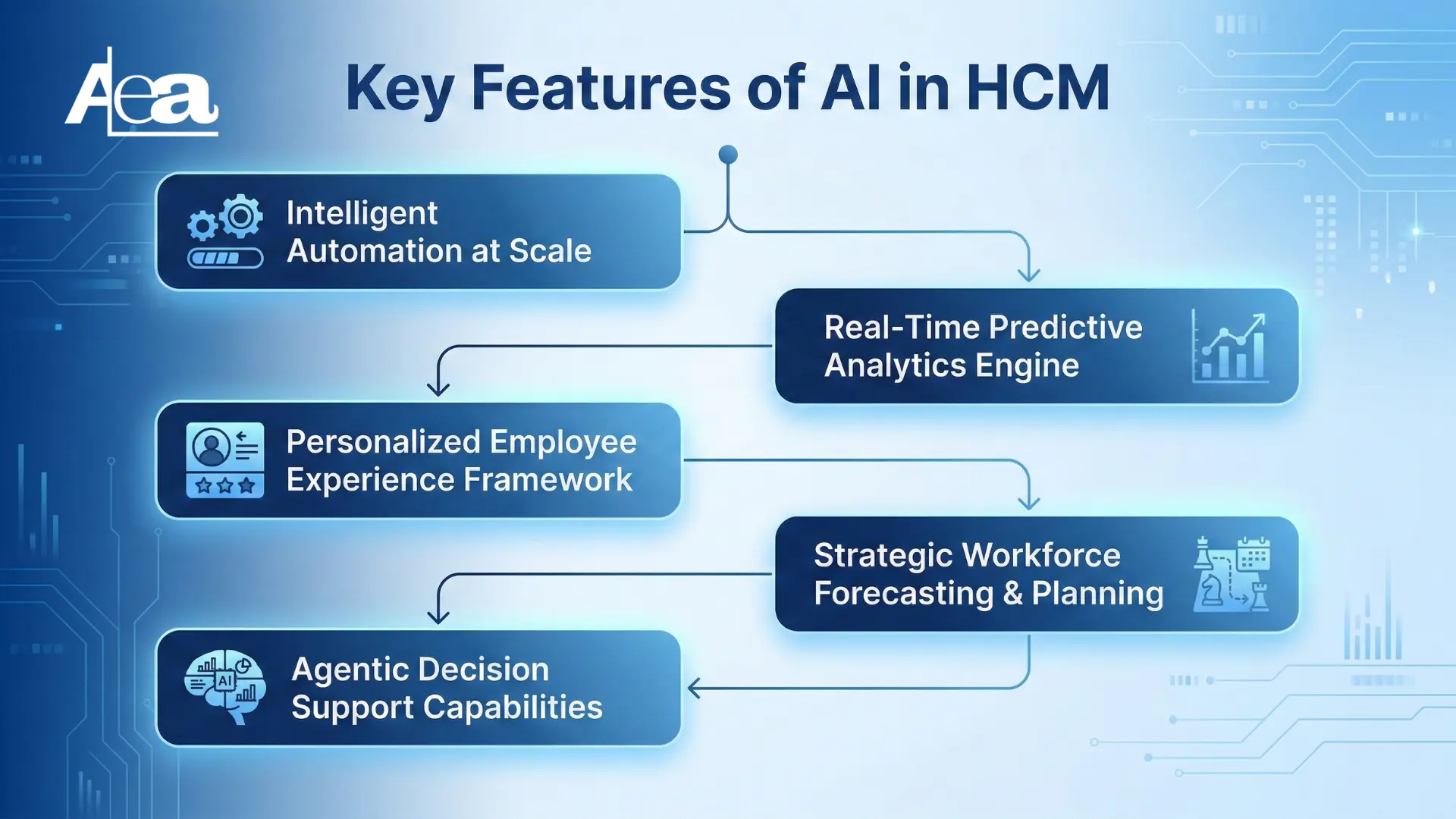
1. Intelligent Automation at Scale-
AI automates repetitive administrative tasks such as payroll processing, resume screening, attendance tracking, and HR query resolution reducing manual workload and enabling HR teams to focus on strategic priorities.
2. Real-Time Predictive Analytics Engine
Advanced analytics capabilities deliver real-time workforce insights, supporting faster, data-driven decision-making across recruitment, retention, and performance management.
3. Personalized Employee Experience Framework
AI-driven personalization tailors learning programs, career pathways, internal communication, and benefits recommendations to individual employee needs, improving engagement and satisfaction.
4. Strategic Workforce Forecasting & Planning
Predictive models analyze workforce trends to anticipate attrition risks, identify skill gaps, and optimize long-term talent strategies.
5. Agentic Decision Support Capabilities
Modern AI in HCM systems, powered by AI agent development services, can proactively recommend and initiate HR actions like retention strategies or skill development plans shifting HR from reactive operations to strategic workforce leadership.
Top Use Cases of AI in HCM
Use Case |
How AI Impacts It |
Recruitment & Talent Acquisition |
AI automates resume screening, predictive candidate ranking, and chat-based engagement, reducing time-to-hire and bias. |
Employee Onboarding |
Personalized onboarding journeys, AI-guided training, and document automation improve new hire experience. |
Performance Management |
Continuous monitoring, AI-driven feedback, predictive performance analytics, and goal alignment. |
Learning & Development |
Skill gap analysis, adaptive learning paths, personalized training, and AI-driven mentoring recommendations. |
Workforce Analytics & Planning |
Attrition prediction, scenario planning, real-time HR dashboards, and strategic staffing insights. |
Employee Engagement & Experience |
Sentiment analysis, AI surveys, chatbots, and personalized wellness/recognition programs. |
Payroll & Administrative Automation |
Automated payroll, compliance monitoring, leave/expense management, reducing errors and administrative burden. |
Career Pathing & Succession Planning |
AI identifies high-potential employees, recommends career paths, and prepares successors for key roles. |
Diversity, Equity & Inclusion (DEI) Monitoring |
AI identifies bias in hiring, promotions, and pay gaps, enabling fair HR practices. |
Employee Retention Prediction |
Predictive analytics flag at-risk employees, enabling proactive engagement and retention strategies. |
HR Chatbots & Virtual Assistants |
24/7 support for employee queries, policy guidance, and internal helpdesk automation. |
Compensation & Benefits Optimization |
AI recommends personalized compensation packages and benefit options to improve satisfaction and equity. |
Workforce Scheduling & Optimization |
Smart scheduling based on workload predictions, skill requirements, and labor regulations. |
Employee Wellness & Mental Health |
AI monitors engagement signals and wellness metrics to provide proactive interventions. |
Knowledge Management & Document Automation |
AI organizes internal knowledge, auto-summarizes HR policies, and enables instant search. |
How to Implement AI in HCM Successfully
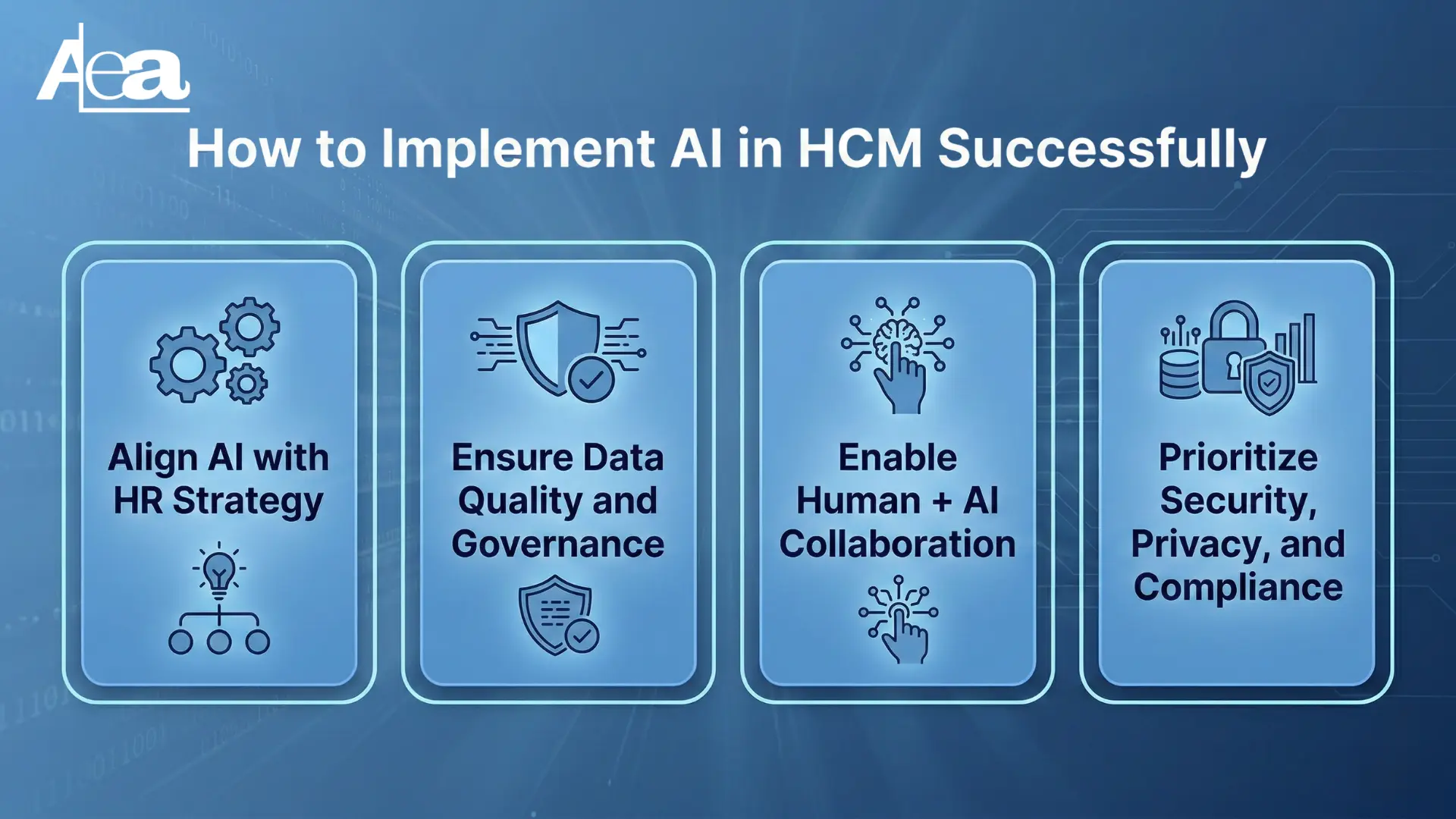
1. Align AI with HR Strategy-
Deploy custom AI-powered HCM solutions aligned with measurable KPIs such as attrition reduction and hiring efficiency. AI initiatives should support broader HR transformation and workforce management goals, not operate as isolated tech experiments.
2. Ensure Data Quality and Governance-
Clean, structured data improves performance of AI-driven HCM platforms. Poor data quality leads to inaccurate predictions and flawed decision-making.
3. Enable Human + AI Collaboration-
AI in HCM should augment HR professionals, not replace them. Train HR teams to interpret AI insights, validate recommendations, and apply contextual judgment. Encourage adoption through upskilling and change management programs.
4. Prioritize Security, Privacy, and Compliance-
Enterprise-grade encryption and compliance frameworks are essential in HCM solutions handling sensitive employee data. Protect sensitive employee data with strong encryption, access controls, and regulatory compliance frameworks (GDPR, local labor laws, etc.).
Challenges and Mitigation
Challenge |
Impact on Organization |
Mitigation Strategy |
Employee Adoption Resistance |
Fear of job displacement, low trust in AI recommendations, and reluctance to change workflows can reduce utilization and ROI. | Deploy structured change management programs, conduct AI training workshops, communicate transparency in AI decision-making, and reinforce human oversight. |
Data Privacy and Bias |
Misuse of sensitive employee data or biased algorithms can lead to compliance violations, reputational damage, and unfair HR decisions. | Implement strong data governance, perform regular bias audits, use explainable AI models, and align with global and local data protection regulations. |
Integration Complexity |
Legacy HRIS and siloed systems create technical friction, data inconsistency, and delayed deployment. | Adopt API-enabled platforms, ensure data standardization, implement phased rollouts, and involve IT stakeholders early. |
Data Quality Issues |
Inaccurate, incomplete, or inconsistent HR data leads to unreliable AI insights and flawed predictions. | Cleanse historical data, establish data validation protocols, and maintain centralized data governance frameworks. |
Over-Reliance on Automation |
Blindly trusting AI recommendations without human review may result in poor hiring, evaluation, or compensation decisions. | Maintain human-in-the-loop frameworks where HR validates AI-generated insights before execution. |
High Implementation Costs |
Initial investment in AI tools, infrastructure upgrades, and training can strain budgets. | Start with high-impact use cases, measure ROI incrementally, and scale based on proven business value. |
Skill Gaps Within HR Teams |
HR professionals may lack the technical expertise to interpret AI-driven analytics effectively. | Invest in AI literacy programs, cross-functional collaboration with data teams, and ongoing upskilling initiatives. |
Ethical and Transparency Concerns |
Lack of clarity in algorithmic decisions can reduce employee trust and create legal exposure. | Implement explainable AI models, publish internal AI ethics guidelines, and ensure transparency in automated decision processes. |
Change Fatigue |
Continuous digital transformation initiatives may overwhelm employees. | Prioritize phased adoption, communicate clear milestones, and celebrate early wins to maintain engagement. |
Upcoming AI Trends in HCM for 2026
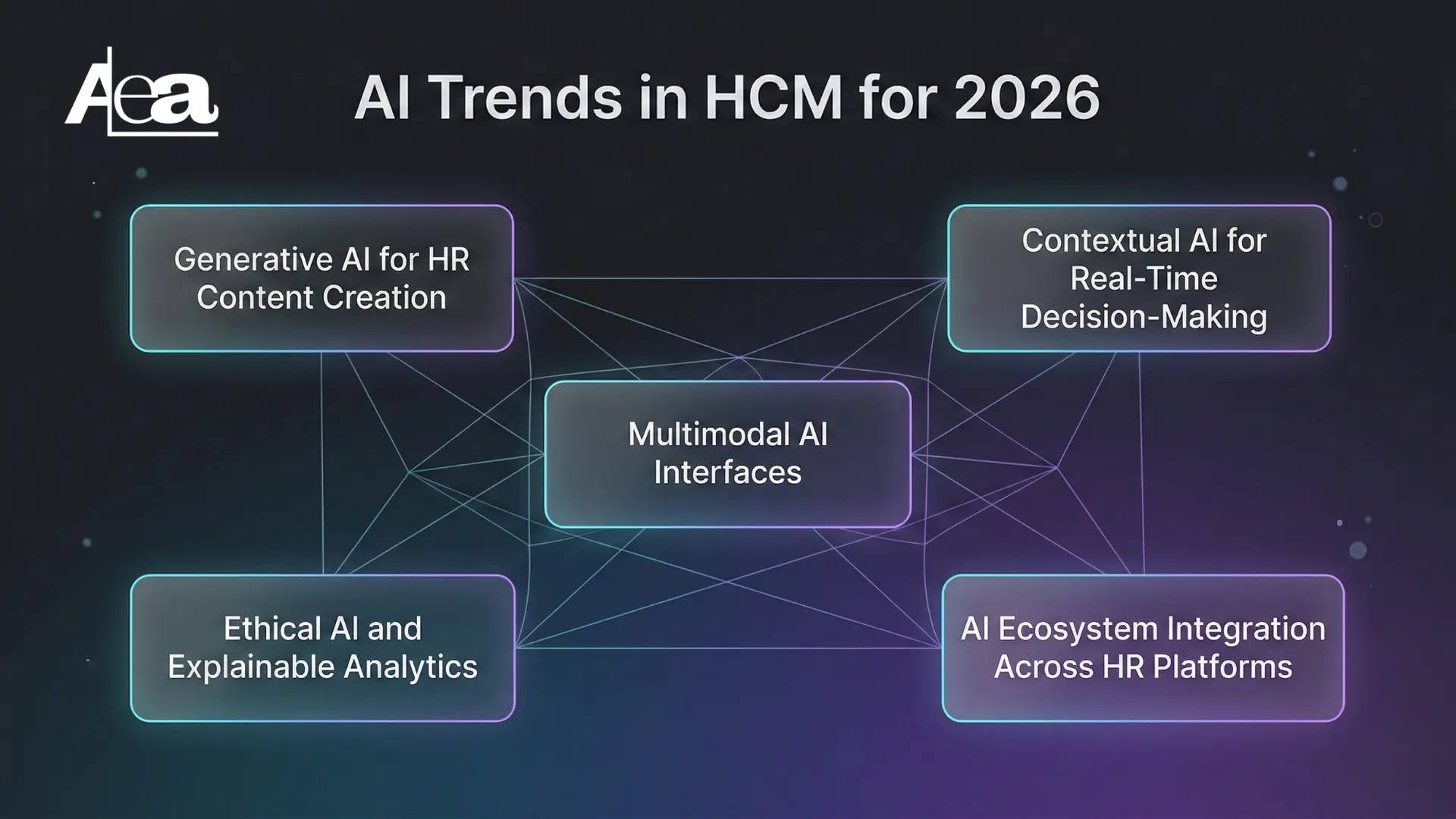
1. Generative AI for HR Content Creation
Generative AI is streamlining the creation of job descriptions, offer letters, HR policies, training materials, and internal communications.
By automating documentation and content workflows, AI in HCM improves consistency, accelerates hiring cycles, and reduces administrative burden while maintaining compliance standards.
2. Contextual AI for Real-Time Decision-Making
AI systems are becoming more context-aware, analyzing workforce data continuously to provide predictive recommendations.
From identifying attrition risks to suggesting performance improvement plans, contextual AI enables proactive HR strategies rather than reactive interventions.
3. Multimodal AI Interfaces
Modern AI in HCM integrates chatbots, voice assistants, and intelligent document processing into unified platforms. Employees can interact with HR systems through conversational interfaces, enhancing accessibility, speed, and overall employee experience.
4. Ethical AI and Explainable Analytics
As organizations prioritize responsible AI adoption, explainable models ensure transparency in hiring, promotions, and compensation decisions. Ethical AI frameworks reduce bias, strengthen compliance, and build employee trust in automated HR systems.
5. AI Ecosystem Integration Across HR Platforms
AI is increasingly embedded across HRIS, ATS, LMS, payroll, and workforce analytics tools. Seamless integration eliminates data silos and enables real-time information flow, creating a unified and intelligent workforce management ecosystem.
Real Life Examples OF HCM
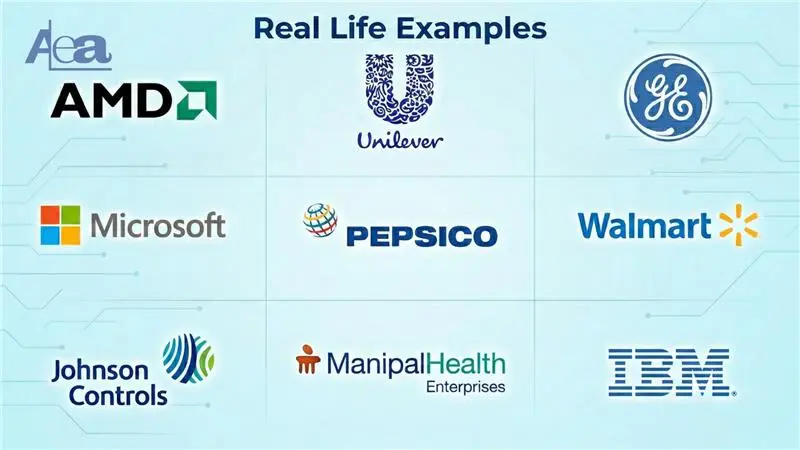
- AMD: Leveraged AI in HCM through an HR agent integrated with SAP SuccessFactors. Result: 80% faster HR inquiry resolution, 50% of queries handled via self-service, and 70% improvement in employee satisfaction.
- Unilever: Used AI in HCM for recruitment automation. Saved over 50,000 interview hours, reduced hiring costs, and increased candidate diversity by automating resume screening and evaluation.
- General Electric (GE): Applied AI in HCM analytics for performance management, achieving a 10% boost in employee productivity via real-time insights and feedback.
- Microsoft: Integrated AI in HCM to analyze employee feedback and engagement patterns, resulting in a 15% increase in overall employee satisfaction.
- PepsiCo: Adopted AI in HCM to detect biased language in job postings, enhancing diversity in the candidate pool by 25%.
- Walmart: Used AI in HCM for workforce analytics and predictive scheduling, cutting labor costs by 15%.
- Johnson Controls: Implemented AI in HCM assistants to automate routine HR support, reducing support call volumes by 30-40% and freeing HR teams for strategic initiatives.
- Manipal Health Enterprises: Deployed a virtual assistant (MiPAL) as part of AI in HCM solutions, reducing new hire attrition by 5% annually and cutting HR case resolution from 2 days to 24 hours.
- IBM: Leveraged AI in HCM automation agents to streamline routine workflows, significantly reducing administrative workload and enabling HR teams to focus on higher-value tasks.
How Alea IT Solutions Can Help Integrate AI in HCM
At Alea IT Solutions, a leading AI software development company, we engineer custom AI-powered HCM platforms that not only automate HR workflows but also understand and enhance the human side of workforce management. We help organizations:
-
Automate HR workflows – From recruitment to performance management, reducing manual tasks with intelligent AI agents.
-
Drive data-driven decisions – Implement predictive analytics and workforce insights for smarter HR strategies.
-
Enhance employee experience – Personalized engagement, feedback analysis, and proactive HR interventions.
-
Seamlessly integrate AI – Connect AI modules with SAP SuccessFactors, Workday, or custom HCM systems.
-
Scale effortlessly – Flexible AI architecture to grow with your HR needs.
Conclusion
AI in HCM is redefining workforce strategy through intelligent automation, predictive analytics, and agentic decision-making.
Modern AI-powered HCM solutions, developed through ai development services and advanced human capital management software, empower HR leaders to move beyond administrative tasks toward strategic workforce optimization.
As organizations adopt scalable, secure, and future-ready HCM platforms, integrating AI has become essential for sustainable growth in 2026 and beyond.