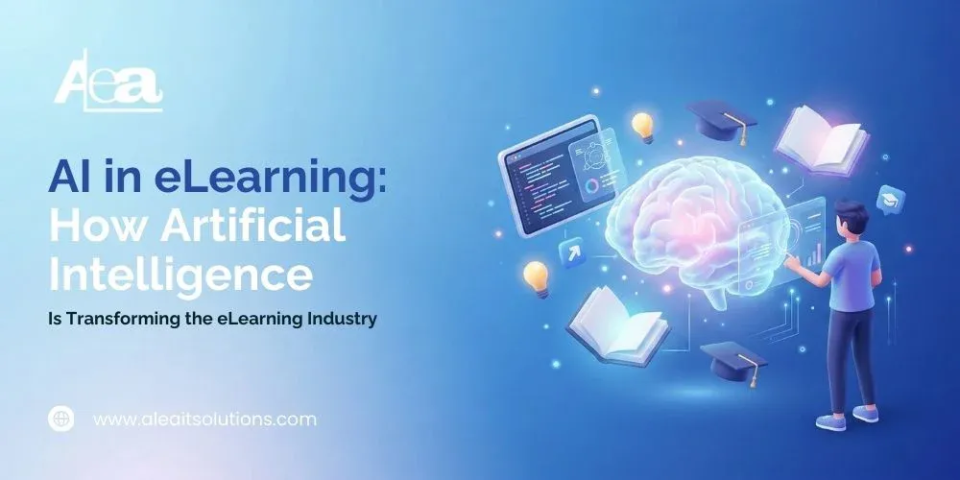
Use of Artificial Intelligence (AI) in eLearning refers to the integration of machine learning, natural language processing, predictive analytics, and intelligent automation into digital learning platforms to enhance personalization, efficiency, and learner engagement.
Its industry relevance continues to grow as organizations shift from static, one-size-fits-all training models to adaptive, data-driven learning ecosystems, and approximately 47 % of learning management systems are expected to be AI-driven by 2025, empowering training teams to automate routine tasks and tailor learning paths at scale.
The use of AI in education is accelerating rapidly; the global AI in education market was valued at around USD 5.88 billion in 2024 and is projected to exceed USD 32 billion by 2030, representing robust growth driven by demand for personalized learning, intelligent assessment tools, and automated content delivery.
Corporate and enterprise training programs are major contributors to this expansion, with 92 % of Fortune 500 companies planning to use AI for employee upskilling and AI-enabled training significantly improving engagement and performance outcomes.
What Are the Most Impactful Applications of AI in eLearning?
Artificial Intelligence is fundamentally reshaping eLearning by making digital education more adaptive, scalable, and data-driven. Below are the most impactful applications of AI in eLearning that are driving measurable improvements in learner outcomes and operational efficiency.
Many organizations are partnering with an experienced eLearning software development company to integrate AI capabilities into their platforms, enabling smarter learning experiences and more efficient digital training solutions.
1. Adaptive Learning and Personalized Learning Paths
AI algorithms analyze learner behavior, performance patterns, and knowledge gaps to dynamically adjust course content, difficulty levels, and progression speed. This ensures each learner receives a customized learning journey rather than a one-size-fits-all experience.
2. Intelligent Tutoring Systems
AI-powered virtual tutors provide real-time guidance, answer contextual questions, and offer instant feedback. These systems simulate one-on-one instruction at scale, improving comprehension and learner retention.
3. Learning Analytics and Predictive Insights
AI processes large volumes of learner data to identify at-risk students, predict performance trends, and recommend timely interventions. This enables instructors and L&D teams to make proactive, evidence-based decisions.
4. Automated Assessments and Grading
Natural language processing and machine learning models enable automatic evaluation of quizzes, assignments, and even open-ended responses. This reduces administrative workload while ensuring consistent, objective assessment standards.
5. AI-Powered Content Creation
Generative AI tools assist in developing course materials, quizzes, summaries, simulations, and microlearning modules. This accelerates course development cycles and reduces production costs.
6. Chatbots and Conversational Learning Interfaces
AI chatbots provide 24/7 learner support, answer FAQs, guide navigation, and facilitate interactive learning experiences. Conversational interfaces enhance engagement and accessibility.
7. Language Translation and Accessibility Enhancements
AI-driven translation, speech recognition, and text-to-speech technologies enable multilingual learning and improve accessibility for learners with disabilities, expanding global reach.
8. Skill Gap Analysis and Workforce Training Optimization
In corporate environments, AI maps employee competencies against organizational goals, identifies skill gaps, and recommends targeted training programs, aligning learning initiatives with business performance metrics.
Collectively, use of AI in education transform eLearning from a static content delivery model into an intelligent, responsive learning ecosystem capable of improving engagement, accelerating skill acquisition, and optimizing training ROI.
Use Cases of AI in eLearning
Use Case |
What AI Does |
Impact |
Adaptive Learning |
Dynamically adjusts content, pace, and difficulty based on learner performance | Improves retention and accelerates skill mastery |
Course Development |
Generates outlines, scripts, assessments, and microlearning modules | Reduces development cycles from weeks to days |
Intelligent Tutoring Systems |
Delivers personalized guidance and contextual feedback in real time | Enhances learner engagement and completion rates |
Learning Analytics |
Analyzes behavioral and performance data to predict outcomes | Enables data-driven instructional decisions |
Automated Assessments |
Auto-grades quizzes and evaluates open-text responses using NLP | Cuts grading workload and speeds up feedback |
AI Chatbots |
Provides 24/7 learner support and navigation assistance | Improves learner satisfaction and scalability |
Interactive Simulations |
Powers branching scenarios and decision-based learning paths | Strengthens real-world skill application |
Skill Gap Analysis |
Maps competencies against role-based benchmarks | Aligns training with workforce performance goals |
Content Recommendation Engines |
Suggests courses based on learner history and skill gaps | Increases course relevance and engagement |
AI-Generated Video & Avatars |
Creates training videos and digital instructors automatically | Ensures consistent delivery and reduces production costs |
Language Translation & Localization |
Translates and adapts content for multilingual audiences | Expands global accessibility |
Speech Recognition |
Enables voice-based interaction and pronunciation analysis | Enhances accessibility and language learning |
Sentiment Analysis |
Evaluates learner feedback and engagement patterns | Identifies content improvement opportunities |
Predictive Learning Paths |
Forecasts learner progression and recommends next steps | Optimizes long-term learning outcomes |
Compliance Monitoring |
Tracks certification status and automates compliance reminders | Reduces regulatory risk |
Gamification Optimization |
Personalizes rewards and challenge levels using behavioral data | Boosts motivation and participation rates |
Workforce Training Automation |
Automates onboarding and role-based training workflows | Accelerates employee ramp-up time |
Knowledge Retention Tracking |
Identifies knowledge decay and schedules reinforcement modules | Improves long-term retention and ROI |
Benefits of AI in eLearning
1. Personalized Learning Experiences –
AI tailors’ content, assessments, and learning paths based on individual performance and behavior, ensuring more relevant and effective knowledge of delivery.
2. Faster Course Development –
Automated content generation, assessment creation, and structured module design significantly reduce development timelines and production costs.
3. Improved Engagement and Efficiency
Real-time feedback, intelligent tutoring, and interactive learning models enhance learner participation while minimizing manual administrative tasks.
4. Data-Driven Decision Making
Advanced analytics provide actionable insights into learner progress, enabling proactive intervention and performance optimization.
5. Scalable Training Delivery
AI-powered platforms support large learner bases without compromising quality, making enterprise-wide and global training more efficient.
6. Enhanced Accessibility and Inclusion
Features such as multilingual translation, speech recognition, and adaptive interfaces make learning accessible to diverse audiences.
7. Continuous Skill Gap Analysis
AI identifies competency gaps and recommends targeted upskilling programs aligned with organizational goals.
8. Higher Training ROI
Automation and personalization improve learning outcomes while optimizing operational costs and resource allocation.
How to Implement AI in Your eLearning Strategy
Artificial Intelligence in education succeeds when approached strategically, not experimentally. Instead of launching scattered pilots, organizations should focus on operational bottlenecks, workforce readiness, and AI-optimized learning design.
1. Audit Workflow Inefficiencies
Identify where time is lost in content creation, review cycles, localization, grading, and reporting. Automate repetitive, low-judgment tasks while retaining human oversight for instructional design and strategic decisions.
2. Build AI Fluency
Equip teams with practical AI skills, governance guidelines, and ethical awareness. Adoption improves when employees understand how to use AI effectively and are encouraged to experiment within clear boundaries.
3. Design for AI-Driven Experiences
Leverage AI for scalable video production, interactive modules, and branching scenarios. These formats enhance engagement and allow personalized, context-based learning at scale.
A focused, phased implementation ensures AI enhances productivity, improves learning outcomes, and scales sustainably across the organization.
Challenges and Ethical Considerations
- Data Privacy and Security – AI-powered platforms collect and analyze extensive learner data, making robust encryption, secure cloud infrastructure, and regulatory compliance essential to prevent breaches and misuse.
- Algorithmic Bias – Biased training data or flawed models can lead to unfair recommendations, inaccurate assessments, or unequal learning opportunities, requiring continuous auditing and model validation.
- Human–AI Balance – Over-automation may reduce meaningful instructor interaction, so maintaining human oversight and blended learning models is critical for quality outcomes.
- Transparency and Explainability – Learners and educators must understand how AI-driven decisions are made, particularly in grading, recommendations, and performance predictions.
- Integration Complexity – Integrating AI capabilities with existing LMS or enterprise systems can require significant technical expertise and infrastructure upgrades.
- High Implementation Costs – Initial development, customization, and maintenance of AI solutions may demand substantial investment before ROI is realized.
- Dependence on Data Quality – AI performance is directly linked to the accuracy and completeness of input data; poor data quality can compromise outcomes.
- Ethical Use of Automation – Organizations must ensure AI enhances learning rather than replacing critical human roles in teaching and mentoring.

Overcoming AI Adoption Challenges in eLearning
Adopting Artificial education in learning can present challenges such as technical complexity, integration issues with existing LMS platforms, data privacy concerns, and internal resistance to change. However, these obstacles can be effectively managed through a structured implementation strategy.
Organizations should begin with a clearly defined use case such as automating assessments or enabling adaptive learning and develop a minimum viable product (MVP) to validate outcomes before scaling.
Ensuring seamless integration with existing systems, establishing strong data governance policies, and maintaining human oversight are critical for long-term success. Partnering with experienced software development teams can further streamline deployment, reduce operational risk, and accelerate time-to-market.
By taking a phased, strategy-driven approach, businesses can unlock the full potential of AI-powered eLearning while minimizing disruption and maximizing return on investment.
Conclusion
AI is redefining the architecture of modern eLearning ecosystems by shifting from static content delivery to intelligent, adaptive, and data-centric learning environments.
As machine learning, natural language processing, and predictive analytics continue to mature, eLearning platforms will become increasingly autonomous capable of personalizing learning paths in real time, forecasting skill requirements, and aligning training outcomes directly with business objectives.
This transformation is being accelerated by collaboration with an experienced AI development company, which helps organizations design scalable AI solutions tailored to modern learning environments.