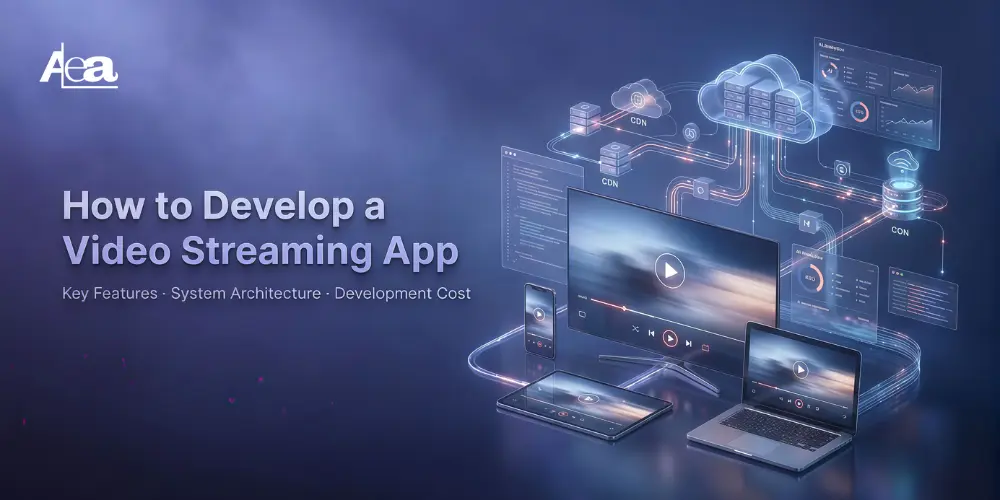
Developing a video streaming app today goes far beyond building basic playback functionality. It is about engineering a high-performance, scalable, and intuitive digital platform similar to a platform like Netflix, where technology, architecture, and user experience work seamlessly together.
While robust features such as streaming, search, and recommendations form the foundation, the development approach determines how efficiently users discover content, interact across devices, and experience uninterrupted playback at scale.
From backend architecture and streaming infrastructure to performance optimization and personalization logic, development decisions directly impact user retention, engagement, and long-term platform growth.
As demand grows for high-performance streaming experiences comparable to the Netflix app, modern video streaming app design must strike the right balance between aesthetics, usability, and scalability.
This includes thoughtful UI/UX design, structured content organization, smooth onboarding, advanced search and recommendation systems, and optimized video playback interfaces.
Clean layouts, responsive controls, and intuitive navigation are foundational to any successful platform like Netflix. Features such as watch history–based recommendations, smart search filters, and consistent cross-device design ensure a frictionless user experience.
Ultimately, effective video streaming app design is not just about how the app looks but how effortlessly it works and feels. In a competitive OTT market, well-executed design is what sets a streaming app apart.
Video Streaming App Market Overview & Key Statistics
- The global video streaming and OTT market continues to grow steadily, driven by increased smartphone penetration, affordable data plans, and changing content consumption habits.
- Mobile app statistics show that mobile video streaming is a major contributor to this surge, with more users shifting to mobile platforms for on-the-go content consumption.
- Global OTT subscriptions are projected to increase from 1.6 billion in 2023 to over 2.1 billion by 2028, reflecting strong long-term demand for on-demand streaming platforms.
- The global OTT revenue market is expected to grow from approximately $69 billion in 2023 to over $100 billion by 2028, supported by subscriptions, ads, and premium content monetization.
- Platforms like Netflix reported revenues exceeding $39 billion in 2024, highlighting the commercial viability of scalable streaming apps.
- Mobile devices account for more than 50% of global video streaming consumption, making mobile-first design a critical factor for success.
- Over 70% of users prefer personalized recommendations, indicating the growing importance of AI-driven content discovery and user-centric design.
- The adoption of ad-supported video-on-demand (AVOD) models is increasing rapidly, offering cost-effective access for users and additional revenue streams for platforms.
- Smart TV and connected device usage continues to rise, with households increasingly consuming content across multiple screens.
- Users now spend an average of 90+ minutes per day on video streaming platforms, emphasizing the importance of intuitive navigation and engaging UI/UX.
- Advances in cloud infrastructure, AI personalization, and adaptive bitrate streaming have significantly reduced development and scaling barriers.
- For businesses and startups, these trends make now an ideal time to invest in video streaming app development and enter a rapidly expanding global OTT ecosystem.
Explore More: How to Develop a Statistics App: Features & Costs
Core Components of a Video Streaming App
Behind every smooth and reliable video streaming platform is a carefully designed system made up of multiple core components.
Each layer plays a distinct role in ensuring fast performance, seamless playback, and an experience users want to return to.
1. User Interface & Experience (UI/UX) Layer
This is where first impressions are made. The UI/UX layer shapes how users discover content, navigate the app, and control playback.
From intuitive menus and smart search to clean layouts and responsive controls, a well-designed interface keeps users engaged, reduces friction, and encourages longer viewing sessions across mobile, web, and smart TV devices.
2. Streaming Engine & Media Delivery
The streaming engine is the backbone of uninterrupted viewing. It manages video encoding, transcoding, and delivery while adapting to different internet speeds and devices.
By leveraging adaptive bitrate streaming and global CDNs, this layer ensures smooth playback, minimal buffering, and consistent video quality—even during peak usage.
3. Backend Infrastructure & APIs
The backend quietly handles everything users don’t see but rely on—user authentication, subscriptions, payments, content access, and system logic.
A scalable backend architecture supported by secure APIs allows the platform to handle growing traffic, multiple integrations, and real-time interactions without performance drops.
4. Content Management & Analytics
This component empowers platform owners to stay in control. Content management tools make it easy to upload, organize, and schedule videos, while analytics provide valuable insights into user behavior, watch time, and engagement patterns. These insights help refine content strategies, personalize experiences, and drive long-term platform growth.
Essential Features of Video Streaming App
A successful Netflix-like video streaming app combines powerful features with intuitive design to deliver seamless viewing experiences.
From user management to advanced playback and monetization, each feature plays a critical role in driving engagement, retention, and revenue.
1. User & Content Management Features
These features form the foundation of user experience and content organization.
- User Registration and Profile Management –Secure sign-up, login, and profile management allow users to personalize their experience. Multiple profiles within a single account help tailor recommendations and viewing preferences for individual users.
- Multi-Profile and Parental Controls- Support for multiple user profiles and parental controls enables safe content access for different age groups. This is especially important for family-oriented streaming platforms.
- Ratings, Reviews, and Content Discovery- Ratings and reviews help users make informed viewing decisions while improving content visibility. Combined with intelligent content discovery, these features enhance user trust and engagement.
2. Engagement & Viewing Features
Engagement-focused features ensure users keep coming back to the platform.
- Search and Smart Filters – Advanced search capabilities with filters by genre, language, popularity, or release year make content discovery faster and more intuitive.
- Watchlist and Continue Watching – Watchlists allow users to save content for later, while the continue-watching feature ensures seamless viewing across sessions.
- Personalized Recommendations (AI-Driven) – AI-powered recommendation engines analyze user behavior to suggest relevant content, increasing watch time and platform engagement.
- Multi-Language and Subtitle Support – Language flexibility and subtitles help platforms reach a global audience and improve accessibility.
3. Advanced Viewing Capabilities
These features elevate the viewing experience and add convenience.
- Offline Download – Users can download content for offline viewing, making the app accessible even without an internet connection.
- Multi-Device Syncing – Seamless syncing across devices allows users to start watching on one device and continue on another without interruption.
- Screen Mirroring and Screencasting – Support for casting content to larger screens enhances the home entertainment experience.
- In-App Notifications – Timely notifications keep users informed about new releases, recommendations, and subscription updates.
4. Monetization & Social Features
These features help platforms generate revenue while boosting user engagement.
- Payment Gateway Integration – Secure and flexible payment options support subscriptions, upgrades, and in-app purchases.
- Subscription and Freemium Models – Platforms can offer multiple monetization models, including monthly subscriptions, freemium access, or ad-supported plans.
- Social Sharing and Engagement- Social features enable users to share content, recommendations, and watch activity, helping platforms grow organically.
Step-by-Step Process of Develop a Video Streaming App
Designing and developing a successful video streaming app requires a structured approach that aligns business goals, user expectations, and technical scalability. Below is a proven step-by-step process followed in modern enterprise app development to build reliable and future-ready streaming platforms.
Step 1: Define the “Why” and Target Audience
The process begins with clarity. Businesses must define the purpose of the app, target market, and long-term objectives. This includes identifying the niche (entertainment, education, sports, or enterprise streaming), defining business goals, and creating detailed user personas based on age, location, device usage, and viewing behavior.
Step 2: Market & Competitor Analysis
Understanding the competitive landscape helps avoid costly mistakes. This step focuses on analyzing existing platforms to identify what works, what fails, and why. Feature gaps, UI/UX strengths, pricing strategies, and user feedback are evaluated to uncover opportunities for differentiation.
Step 3: Feature Planning & User Journey Mapping
Based on insights gathered, features are prioritized and mapped to the user journey. This stage defines the scope of an MVP versus a full-scale platform, ensuring critical features are launched first while leaving room for future enhancements.
Step 4: Wireframing & Information Architecture
Wireframes act as the blueprint of the app. Screens, navigation flows, and content hierarchy are structured to ensure smooth transitions and intuitive user movement throughout the platform. This step helps validate usability before visual design begins.
Step 5: UI Design & Interactive Prototyping
Visual design brings the app to life. Consistent branding, typography, color systems, and interactive elements are designed to create an engaging experience. Clickable prototypes are tested to validate usability, accessibility, and overall flow before development starts.
Step 6: Mobile-First & Cross-Platform Design Strategy
Modern streaming platforms must work seamlessly across devices. A mobile-first approach ensures performance and responsiveness on smartphones, while cross-platform planning covers Android, iOS, web browsers, and smart TVs—each with tailored interaction patterns.
Step 7: Backend Architecture & Streaming Infrastructure Planning
This step focuses on building a scalable and secure foundation. Backend architecture is designed to support user management, subscriptions, payments, and content delivery. CDN integration, cloud storage, APIs, and adaptive bitrate streaming are planned to handle high traffic and concurrent streams.
Step 8: App Development, Testing & Quality Assurance
Development begins with frontend and backend implementation, followed by rigorous testing. Performance testing ensures smooth playback, security testing protects user data, and optimization ensures the app performs well under varying network and load conditions.
Step 9: Launch, Monitoring & Continuous Improvement
After launch, real-time monitoring and analytics track performance, user behavior, and engagement. Feedback-driven updates, feature enhancements, and performance optimizations help the platform evolve and stay competitive in a rapidly changing OTT market.
Technology, Innovation & Cost Considerations for Video Streaming App Development
Building a scalable video streaming app requires the right blend of technology, innovation, and strategic planning. For businesses offering or investing in app development services, choosing the correct architecture, tools, and cost model is essential to deliver reliable performance and long-term growth.
As a modern mobile app development company, Alea focuses on creating streaming platforms that meet enterprise-grade requirements while remaining flexible and future-ready.
1. Frontend Technologies
Frontend technologies shape the user experience across devices. In enterprise app development, frameworks are selected to ensure fast loading, smooth navigation, and consistent performance across mobile, web, and smart TV platforms. A well-optimized frontend is critical for delivering seamless playback and intuitive content discovery in any video streaming app.
2. Backend Technologies
The backend forms the operational core of the platform. Scalable APIs, robust databases, and microservices architecture allow streaming apps to handle high user volumes efficiently. This backend approach enables mobile app development companies to support real-time interactions, secure transactions, and rapid feature expansion.
3. Video Processing & Streaming
“Video processing ensures high-quality playback across varying network conditions. Encoding, transcoding, and adaptive bitrate streaming technologies dynamically adjust video quality to deliver uninterrupted viewing.
These capabilities are essential for building a reliable AI video app, OTT platform, or when you aim to develop a video editing app with robust performance and global reach.”
4. Cloud Infrastructure & DevOps
Cloud platforms such as AWS and Azure provide the scalability and resilience required for enterprise streaming solutions. DevOps practices, including CI/CD pipelines, help app development services teams deploy updates faster, optimize performance, and manage infrastructure efficiently.
5. Security & Authentication
Security is a critical component of enterprise app development. DRM solutions protect content rights, while data encryption and secure authentication ensure user data and transactions remain protected across the platform.
6. Testing, Quality Assurance & Scalability
Comprehensive testing ensures the video streaming app performs consistently across devices and network conditions. Load testing, security testing, and scalability planning help platforms grow without compromising user experience or stability.
Advanced Technologies That Make Streaming Apps Stand Out
Innovation plays a key role in differentiation. AI-powered personalization enables smarter recommendations, increasing engagement and retention. Adaptive bitrate streaming ensures smooth playback, while emerging AR and VR features add immersive experiences.
Real-time analytics provide actionable insights that help optimize both content and performance—especially in advanced AI video app solutions.
Cost to Develop a Video Streaming App
The cost of building a streaming platform depends on design complexity, supported platforms, and feature depth. UI/UX design costs vary based on branding and interactivity, while development costs differ for mobile, web, and TV apps.
Many businesses partner with a reliable mobile app development company to launch an MVP first and scale toward an enterprise-level solution over time.
“The cost of building a scalable video streaming app depends on UI complexity, platform coverage, feature depth, and infrastructure requirements.
Mobile app development cost varies significantly, with companies offering professional development services typically structuring pricing based on scope and long-term scalability—especially for enterprise and AI-driven platforms.
1. UI/UX Design Cost Breakdown
UI/UX design costs vary depending on branding, user research, and device coverage.
- Basic UI/UX (MVP-focused, mobile only): $3,000 – $6,000
- Custom UI/UX (multi-platform, interactive flows): $6,000 – $12,000
- Enterprise-grade UI/UX (mobile, web, smart TV, usability testing): $12,000 – $20,000
Advanced UX design—such as personalization, accessibility compliance, and retention-focused flows—often requires experienced mobile app developer to optimize engagement and reduce churn.
2. Development Cost by Platform & Features
Development costs scale with platform support and feature sophistication.
- Android or iOS app (single platform): $15,000 – $30,000
- Cross-platform app (Android + iOS): $25,000 – $50,000
- Web + mobile + smart TV ecosystem: $45,000 – $90,000
Feature-driven cost additions:
- AI recommendations & analytics: +$8,000 – $15,000
- Offline downloads & DRM security: +$6,000 – $12,000
- Payment, subscriptions & monetization: +$4,000 – $8,000
Full-scale builds are commonly delivered by experienced app development firms with expertise in scalable architectures.
3. MVP vs Enterprise-Level App Pricing
The pricing difference between MVP and enterprise solutions is significant.
- MVP video streaming app: $20,000 – $35,000
- Growth-stage app (advanced UX + analytics): $40,000 – $70,000
- Enterprise-level streaming platform: $80,000 – $150,000+
Enterprise applications often involve AI-powered personalization, automation, and data-driven insights, typically built in partnership with a specialized ai app development company.
Factors Affecting Overall Development Cost
Several variables directly influence the final custom app development cost:
- Cloud hosting, CDN, and storage usage: $500 – $3,000/month
- Third-party APIs and integrations
- Security, compliance, and DRM implementation
- Ongoing maintenance and feature upgrades: 15–25% of initial cost annually
Careful planning and phased development help control costs while ensuring scalability and performance.
Why Choose AleaIT Solutions for Video Streaming App Development
AleaIT Solutions is a trusted technology partner for building scalable, secure, and high-performance video streaming apps tailored to modern user expectations.
“We offer end-to-end app development services for media and entertainment company, covering product strategy, UI/UX planning, backend architecture, streaming infrastructure, and post-launch optimization.
Our development approach focuses on reliability, performance, and long-term scalability across mobile, web, and smart TV platforms, all while considering mobile app development cost to ensure cost-effective solutions for our clients.”
We specialize in integrating AI-driven personalization, intelligent content recommendations, and real-time analytics to help streaming platforms increase engagement, watch time, and user retention.
By leveraging advanced AI and data-driven insights, we enable businesses to deliver personalized viewing experiences similar to leading OTT platforms.
Final Thoughts: Building a Future-Ready Video Streaming Platform
Building a successful video streaming platform requires more than launching an app with basic playback features. Businesses must adopt a strategic approach that aligns technology, user experience, and long-term scalability from the outset.
Key decisions around architecture, content delivery, personalization, security, and monetization directly influence platform performance and user retention.
For long-term growth, investing in scalable infrastructure, AI-driven recommendations, and data analytics is essential. These capabilities help platforms adapt to evolving user behavior, improve content discovery, and support new revenue models as the market matures.
Continuous optimization, regular feature enhancements, and performance monitoring ensure the platform remains competitive in a fast-changing OTT landscape.
FAQs on Video Streaming App Design & Development
1. How long does it take to build a video streaming app?
The development timeline depends on the app’s complexity, features, and supported platforms. A basic MVP can take 3–4 months, while a full-scale or enterprise-level video streaming app with advanced features, AI integration, and multi-device support may take 6–9 months or longer.
2. How much does a Netflix-like app cost?
The cost of developing a Netflix-like video streaming app typically ranges from $20,000 to $150,000+, depending on UI complexity, feature set, platform coverage, security requirements, and scalability.
MVP versions cost significantly less, while enterprise-grade solutions with AI personalization and advanced analytics require higher investment.
3. What technologies are best for OTT platforms?
Modern OTT platforms use technologies such as React Native or Flutter for frontend development, Node.js or Python for backend services, cloud platforms like AWS or Azure, and streaming technologies such as HLS, MPEG-DASH, and adaptive bitrate streaming. AI and analytics tools are also essential for personalization and performance optimization.
4. How does Aleait Solution ensure scalability and performance?
AleaIT Solutions designs streaming platforms using cloud-native architecture, scalable APIs, CDNs, and microservices. We implement adaptive streaming, performance monitoring, and load optimization strategies to ensure smooth playback, high availability, and reliable performance—even as user demand grows.