Key Takeaways
- Generative AI is becoming core IT infrastructure, moving beyond experimentation into everyday software development and IT operations.
- Agentic AI is the next evolution, enabling AI systems to plan, execute, and verify multi-step tasks with less human intervention.
- QA teams are using AI to scale testing, including test-case generation, edge-case simulation, user-flow mapping, and bug detection.
- Startups and smaller teams can use AI to increase productivity without needing a large engineering workforce, particularly across coding, support, testing, and documentation.
- AI adoption comes with risks, including data privacy, legacy-system integration, accuracy issues, and the need for human oversight.
- AI governance and guardrails are essential when organizations work with sensitive business data or deploy AI-generated outputs at scale.
Let’s call it like it is over the past few years, “Generative AI” has been hyped to the moon. It showed up in every keynote, every investor deck, and more than a few product roadmaps that never quite delivered. But now, in 2026, we’re seeing something different. The noise is dying down, and the real value is starting to show.
Gartner projects that by 2026, 40% of enterprise applications will embed task-specific AI agents, up from less than 5% in 2025 a sign that generative AI is no longer a side project but core infrastructure. Gartner’s 2026 AI Agent Forecast This is where agentic AI AI that doesn’t just generate a suggestion but plans, executes, and verifies multi-step tasks on its own enters the picture, and it’s the shift most IT services conversations still haven’t caught up to.
When we asked our audience what “AGI” stands for, 84% correctly answered Artificial General Intelligence, while 16% gave other answers such as “Automated Global Integration” and “AI Generated Inputs.” As per our stats from the Alea IT Solutions AGI Quiz, this shows that there is still some confusion around AI terminology. More importantly, most AI solutions being used in IT services today are not AGI. They are focused on specific tasks, using generative AI and agentic AI to solve real business problems and deliver practical results in 2026.
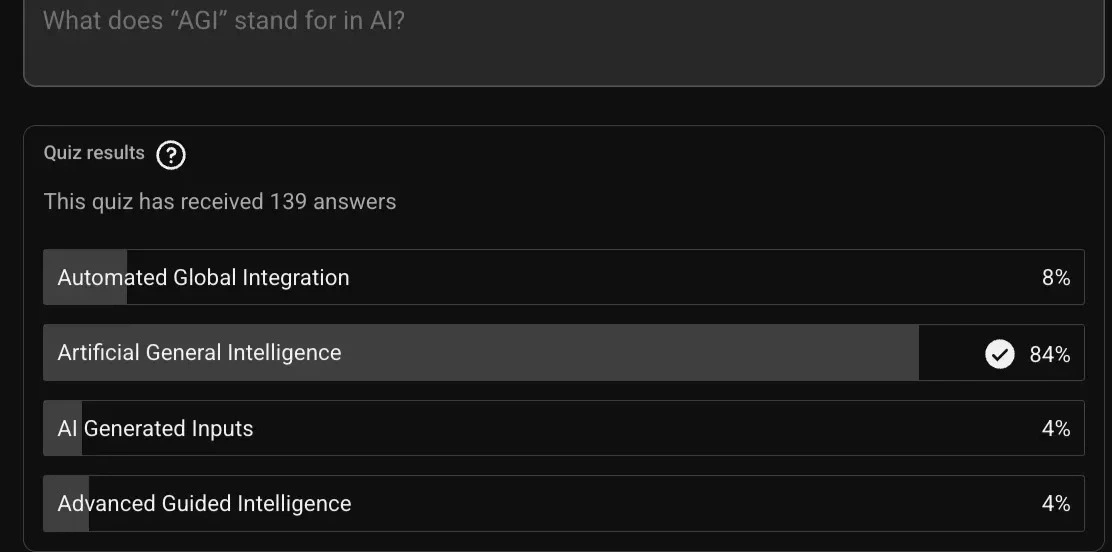
What does “AGI” stand for in AI? Take our quick quiz.
In the background without much fanfare generative AI has started changing how modern IT teams work, day in and day out.
Today, developers lean on AI coding assistants that do more than autocomplete they’re actually helping teams write tighter, cleaner code. QA folks are going beyond scripting automation; they’re using AI to surface edge cases, trace bugs, and even suggest fixes. Ops teams no longer scramble for test data it’s generated on demand.
Internal support? It’s levelled up, thanks to AI chatbots that understand context and escalate issues when needed. And documentation that eternal chore finally gets some help, with AI drafting and updating it nearly in step with code pushes.
It’s not experimental anymore. This is happening now, and it’s changing the way sharp IT teams get things done.
What does “AGI” stand for in AI? Take our quick quiz and see if you get it right.
Where Generative AI Is Actually Helping Right Now
At its best, generative AI takes the dull, repetitive tasks off engineers’ plates and it does it well enough to keep pace with the speed of product teams.
AI now writes roughly 41% of all code in production codebases, and developer adoption of AI tools has climbed to around 85% up sharply from under 14% just two years ago.
Here’s where it’s pulling real weight:
Writing and Refactoring Code
This isn’t about replacing developers it’s about removing friction. Whether you’re cleaning up old PHP, generating scaffolds for new APIs, or spinning up the bones of a frontend, generative AI development tools can lay the groundwork fast. Think of it like pairing with a teammate who never complains and knows every stack inside out.
In a controlled Microsoft Research study, developers using GitHub Copilot completed a real coding task 55.8% faster than developers working without it one of the clearest productivity numbers in the AI coding space to date.
Smarter Support, Fewer Headaches
We’re way past the era of dumb, rule-based chatbots. The best AI assistants today understand real user intent, handle the routine stuff, and escalate when it’s actually needed. For lean teams, that’s fewer late nights chasing support tickets and more time building features that matter.
Quality Assurance That Keeps Up
QA teams are using AI to keep up with the breakneck pace of software delivery. It’s writing test cases, simulating edge scenarios, mapping user flows, and catching bugs before they go live. This isn’t just automation it’s intelligent assistance that scales with your release velocity.
Docs That Don’t Fall Behind
Trying to keep documentation current with weekly (or daily) code changes is a losing game. Now, AI can draft inline comments, setup instructions, and even API docs directly from code. Is it perfect? No. Is it a huge leap forward? Absolutely. Meanwhile, in DevOps, AIOps is starting to nudge teams toward better CI/CD configurations sometimes even implementing those changes directly.
These aren’t speculative ideas. These are tools being used right now to streamline real workflows.
Agentic AI: The Next Layer on Top of Generative AI
If 2024–2025 was about generative AI producing content on request, 2026 is about agentic AI systems that take that output and act on it, across multiple steps, with far less hand-holding.
Early results are striking. organizations report 30-50% efficiency gains from agentic AI adoption in areas like automated coding, testing, and workflow orchestration, and 88% of early agentic AI adopters report positive ROI, compared with 74% for generative AI use more broadly. It’s also moving fast on the IT leadership side surveys show 93% of IT leaders plan to introduce autonomous AI agents within the next two years.
The practical difference for an IT services team: a generative model can write a function when you ask it to. An AI agent can pick up a bug report, reproduce the issue, write a fix, run the test suite, and flag anything it isn’t confident about with a human reviewing the output, not typing every line of it.
How Startups and Fast-Moving Teams Are Putting It to Work
For startups or growing tech companies, speed is the difference between thriving and stalling. But moving fast usually means cutting corners somewhere tech debt, patchy documentation, late-night fire drills. Generative AI flips that around.
A small dev team with the right AI tools can match the output of a much larger group. Tedious coding gets automated. QA becomes baked into every pull request. Internal chatbots handle the bulk of employee requests without bottlenecks. Better documentation makes onboarding new engineers quicker and far less painful.
Even mid-sized teams are using AI to breathe life into legacy systems, reduce manual effort, and chip away at years of accumulated tech debt.
The point? You don’t need a massive AI initiative. You just need to know where it makes the biggest difference.
What’s Still Getting in the Way
No tool is perfect and generative AI has its own set of challenges.
Data Sensitivity & Oversight
Feeding sensitive company data into third-party models without guardrails? That’s a red flag. Responsible use means knowing where your data goes, who has access, and making sure models are tuned with privacy in mind.
This is exactly why AI governance has become its own line item on enterprise roadmaps, not an afterthought. Our AI consultancy services help teams put that governance layer in place before scaling anything.
Old Tech, New Tricks
If your infrastructure is modern and API-driven, integrating AI is fairly smooth. But if you’re dealing with decade-old codebases or monoliths, you’ll need to layer in smarter interfaces or wrap pieces into microservices before you see real results.
Accuracy & Trust
AI is powerful, but it’s not infallible. Trust hasn’t kept pace with adoption: only around 29% of developers say they trust AI-generated output to be accurate, down from 40% two years ago, even as regular usage has climbed.
Mistakes still happen. Teams need to validate outputs and keep checks in place especially when AI is writing code or answering users.
Tools That Actually Help
The good news? You don’t have to start from scratch. There’s a solid ecosystem of tools built to help teams test, learn, and build responsibly.
- OpenAI’s GPT models are flexible enough to power everything from internal tools to product features.
- LangChain makes it easier to connect AI with your own company’s data.
- GitHub Copilot can be a huge timesaver once your devs learn when to trust it and when to double-check.
- Azure OpenAI is built for teams in regulated industries who need enterprise-grade controls and compliance.
GitHub Copilot alone has crossed 26 million users and 4.7 million paid subscribers, and the wider AI coding tools market passed $7 billion in 2025 this isn’t a niche category anymore, it’s default developer tooling.
The best tool for you depends on your stack, your data, and your risk appetite. If you’d rather have that data-and-model layer built and connected properly the first time, our LLM development team handles exactly that. But the barrier to entry has never been lower.
Why Tailoring AI to Your Business Pays Off
Out-of-the-box AI is useful but it only gets you so far. The real edge comes when you fine-tune it to your world.
Think about:
- A support bot that actually understands your app’s weird edge cases.
- A coding assistant that speaks your company’s architecture fluently.
- Internal tools that write docs in the same voice your team already uses.
This isn’t science fiction it’s what smart teams are doing to save time and raise the bar.
A Down-to-Earth Roadmap for Tech Leaders
If you’re leading an engineering org, here’s a no-nonsense way to start:
- Start small. Pick one pain point onboarding docs, testing, support tickets and build a quick prototype.
- Stay involved. This isn’t a “set it and forget it” side project. This needs guidance, especially early on.
- Track what matters. Monitor how it affects accuracy, speed, and team bandwidth.
- Put up guardrails. Establish checks, reviews, and policies that work for your team.
- Scale carefully. Once you see the ROI, invest in deeper integration, better tooling, and custom models.
The most successful teams aren’t chasing shiny demos. They’re embedding AI where it makes real, lasting impact.
How ALEAIT Solutions Helps You Make It Real
At ALEAIT Solutions, we don’t chase trends we build working systems.
We help you:
- Design infrastructure that’s ready for AI, not just patched to support it.
- Modernize your tech stack so generative tools plug in smoothly.
- Build the right governance to protect sensitive data and maintain control.
- Fine-tune AI models to speak your language literally and technically.
Let’s Make AI Work for You
Skip the generic demos. Don’t settle for cookie-cutter tools. ALEAIT Solutions works directly with tech leaders to design, build, and scale real AI solutions from smart automation to enterprise-grade rollouts.
Whether you’re cleaning up legacy systems or building the next thing, we’ll bring the strategy, engineering, and hands-on AI expertise to make it happen.
Let’s stop talking about the future and start building it.
[Talk to an AI Strategist at ALEAIT →]
Frequently Asked Questions
Generative AI in IT services refers to AI systems that help teams generate code, test cases, documentation, support responses, and other technical outputs. It helps reduce repetitive work and improve development and operational efficiency.
Generative AI is helping developers write, refactor, and document code faster. AI coding assistants can generate code scaffolds, suggest fixes, and support developers throughout the software development lifecycle.
Generative AI primarily produces content or recommendations based on a prompt, while agentic AI can plan and execute multi-step tasks with less human intervention. For example, an AI agent can reproduce a software bug, create a fix, run tests, and flag uncertain results for human review.
Generative AI can create test cases, simulate edge scenarios, map user flows, and help identify bugs before software reaches production. This allows QA teams to keep pace with faster development cycles.
Yes. Generative AI can assist teams working with legacy code by helping refactor code, generate documentation, and reduce manual development work. Older monolithic systems may still require APIs, interfaces, or microservices to integrate AI effectively.
Key challenges include data sensitivity, privacy, integration with legacy systems, output accuracy, and maintaining human oversight. Organizations should establish governance, validation processes, and appropriate guardrails before scaling AI.
Companies can start with a focused use case such as documentation, software testing, onboarding, or support tickets. After validating the results and measuring ROI, they can gradually expand AI integration across their workflows.
The blog highlights OpenAI GPT models, LangChain, GitHub Copilot, and Azure OpenAI as tools that can support AI development, enterprise applications, coding workflows, and integration with business data.
Customizing AI allows organizations to adapt models and workflows to their specific data, processes, technology stack, and business requirements. This can make AI more useful for areas such as customer support, coding assistance, and internal documentation.
Teams should validate AI-generated outputs, maintain human review where necessary, monitor performance, and establish governance policies. This is particularly important when AI is generating code or responding to users.
Yes. The blog emphasizes starting with a small, high-impact use case rather than launching a large AI initiative. AI can help smaller teams automate coding, testing, support, documentation, and other repetitive workflows.
ALEAIT Solutions helps businesses design AI-ready infrastructure, modernize technology stacks, establish AI governance, and fine-tune AI models for specific business requirements.