
From 3 Weeks to 1 Week: AI...
Built a multi-channel AI recruitment agent combining automated phone screening, predictive attrition modeling, and multilingual...
View Case Study




The client is a field operations company whose technicians and inspectors visit properties to assess and document conditions, then file structured reports into internal and partner systems. As visit volume grew, manual documentation became the primary bottleneck slowing report turnaround and introducing inconsistency between inspectors.
The client’s biggest reporting bottleneck sat at the point of capture, not the point of analysis. Field staff were taking photos on a phone, writing notes separately, then reconstructing a formal write-up hours or days later, often losing detail in translation. AleaIT designed and implemented an AI wearables integration that captures visual and voice data on-site and turns it into structured, submission-ready reports automatically, cutting the gap between “field visit” and “filed report” from hours to minutes.

Field Services & Inspection Operations

AI Wearables Integration, AI Agent Orchestration, Enterprise Systems Integration

Mid-sized Field Operations Company

Build Your Own AI Wearables Integration
Field inspectors wear Ray-Ban Meta smart glasses to begin hands-free property inspections, eliminating the need for a separate phone or camera during on-site claims documentation.
We integrated Ray-Ban Meta Smart Glasses into the field inspection workflow, allowing inspectors to capture property photos and videos hands-free while documenting damage on-site.
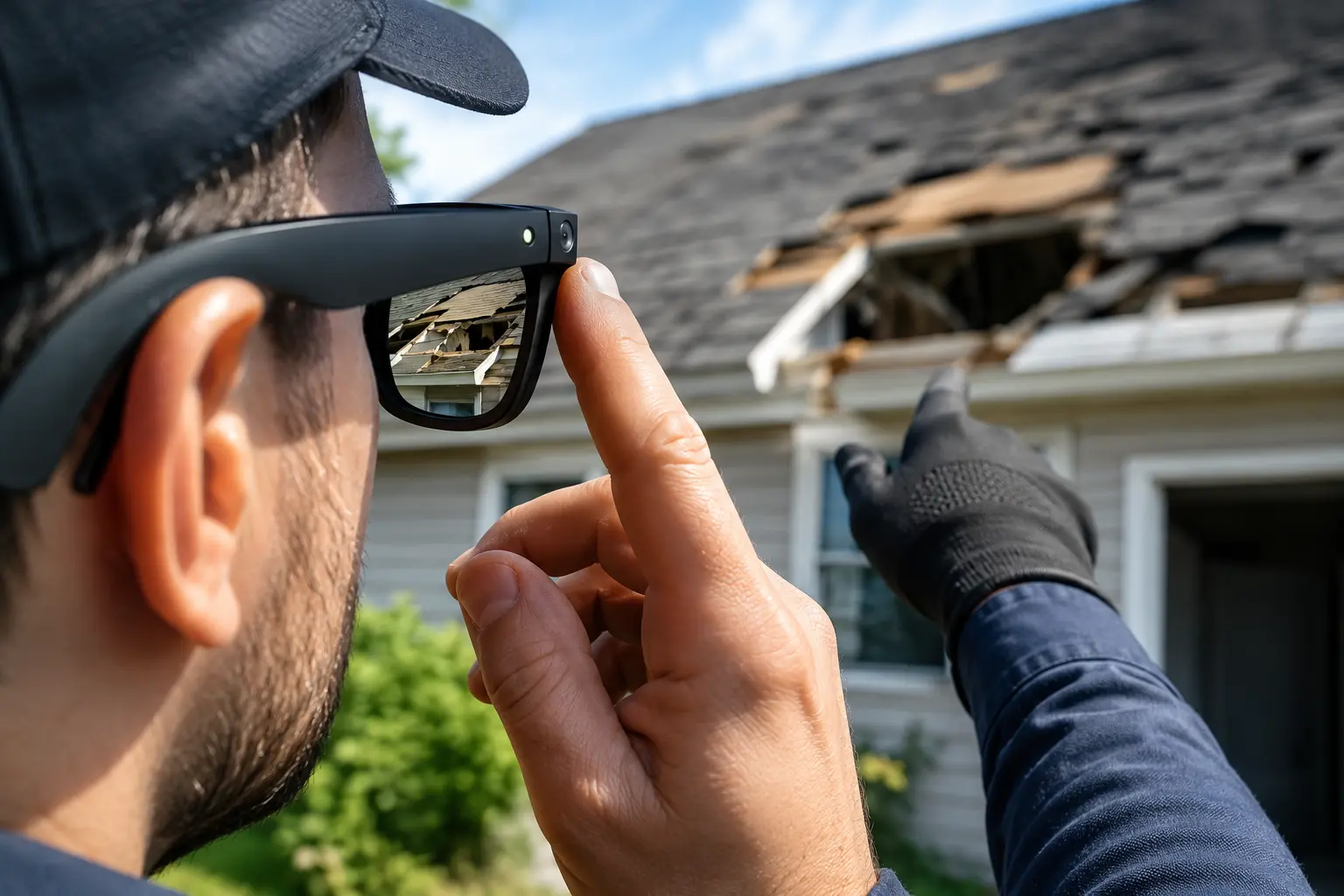
We connected the captured images and videos to the AI processing layer, which reviews the visual information and provides the relevant property details for the inspection report.
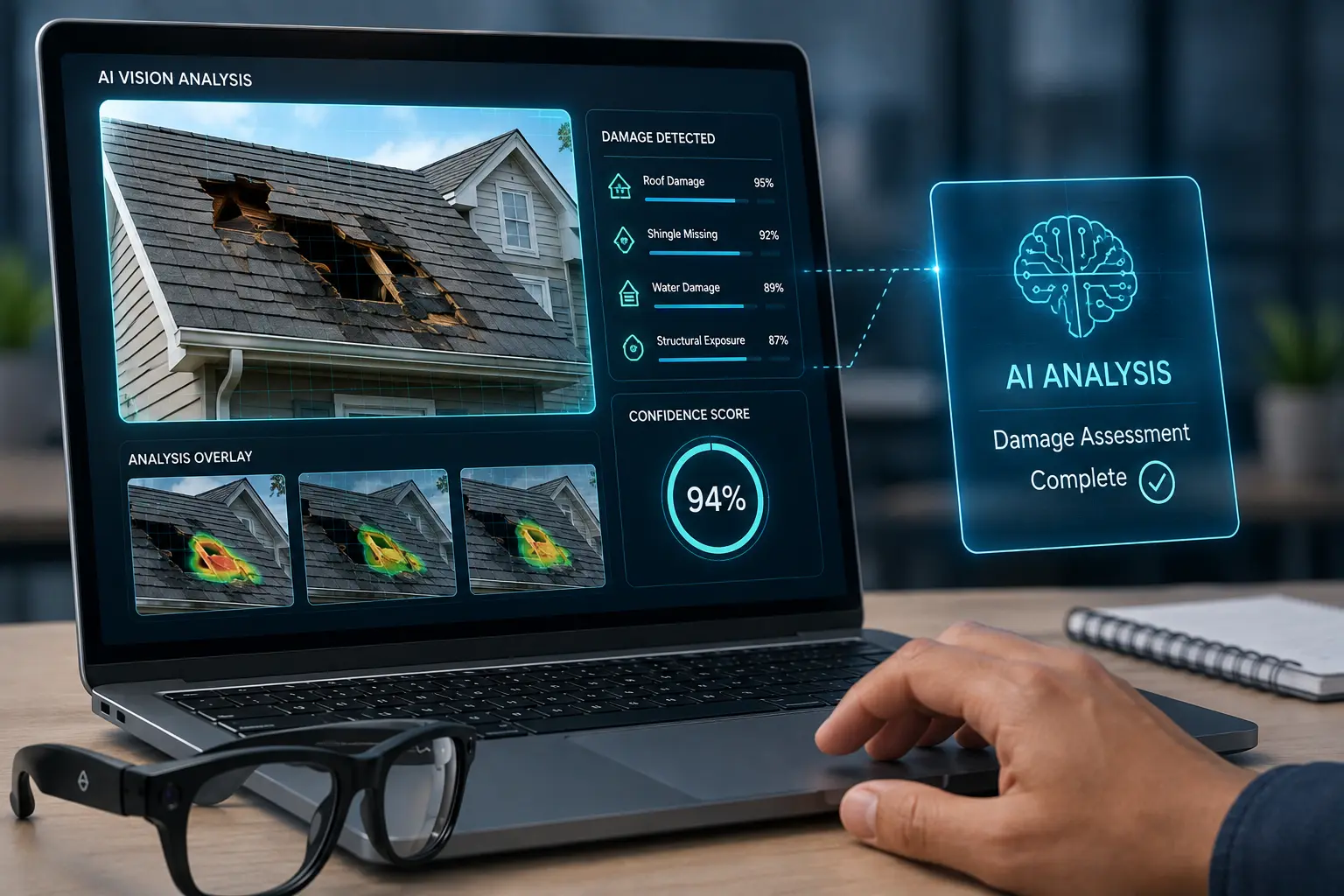
We added speech-to-text to capture what homeowners or clients say during the inspection, including requests for repair, replacement, or reimbursement.
We connected the captured visual and voice information with an LLM to turn the inspection details into clear, structured descriptions that can be used in the report.
We built the tagging logic to organize inspection information by details such as damage type, location, severity, and request category, making the data easier to review and process.
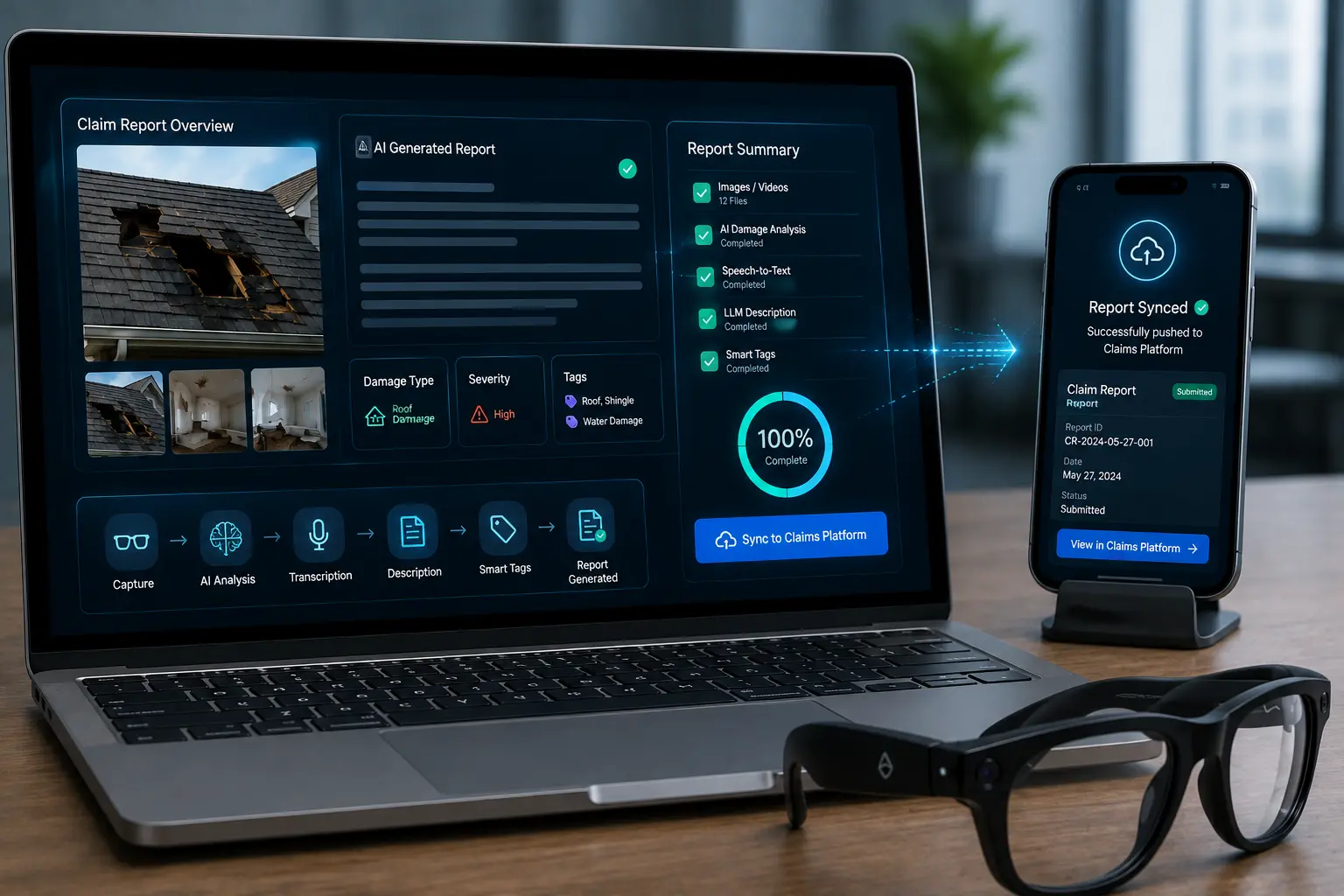
We connected these outputs into an automated reporting workflow that brings together the descriptions, tags, and captured media, then sends the completed report to the client’s claims platform through API integration.
The client’s field reporting process created mounting delays and inconsistency as visit volume grew. AleaIT’s engagement addressed each challenge through a purpose-built architecture, not an off-the-shelf pilot kit.
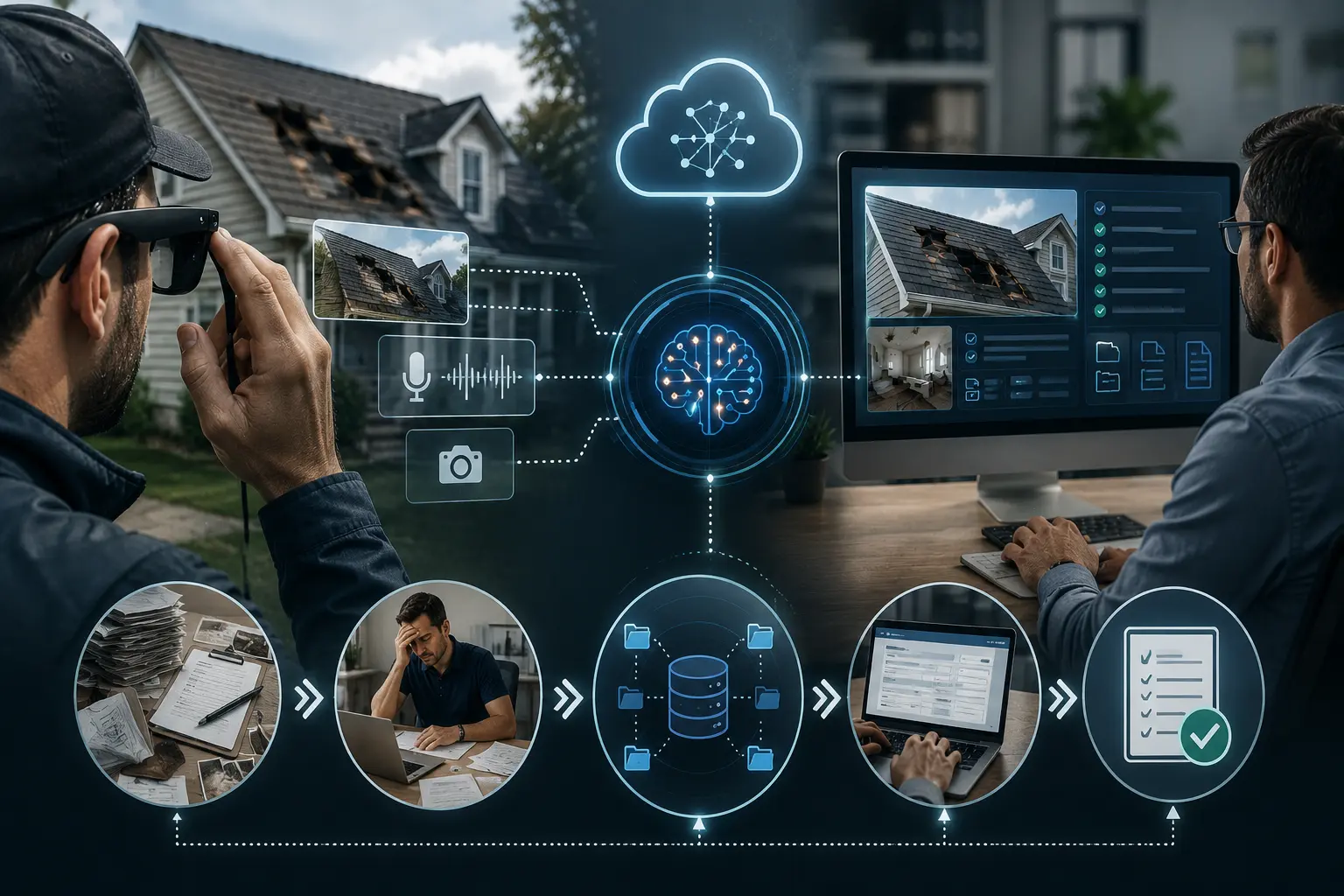
Photos, notes, and homeowner or client statements were captured separately and depended on individual inspectors to reconstruct into a full write-up, producing inconsistent quality and terminology across reports.
AleaIT implemented an AI-agent pipeline that generates a structured description directly from field capture at the point of inspection, standardizing output regardless of who’s wearing the device.
Field data had to be manually re-typed into the claims/reporting system after the visit, creating a lag between inspection and filed report and introducing transcription errors.
AleaIT built a direct API integration from the AI agent layer into the client’s reporting system, so tagged, structured data lands in the correct record automatically no manual re-entry required.
What a homeowner or client asked for on-site (repair, replacement, reimbursement, further inspection) was often paraphrased secondhand by the inspector later, losing precision and sometimes creating disputes over what was actually requested.
AleaIT added real-time voice transcription through the glasses’ microphone, with an AI agent that classifies the statement against standard request categories at the moment it’s spoken so the record reflects what was said, not a summary written hours later.
Inspectors visually estimated the size and severity of an issue (affected area, damage extent) with no consistent method, leading to estimates that varied significantly between staff on similar conditions.
AleaIT’s AI agent layer was built to structure inspector-provided severity and scope inputs against a standardized rubric at the point of capture, producing a consistent, repeatable baseline that inspectors can adjust rather than estimate from scratch.
Back-office reviewers couldn’t begin processing a case until the inspector returned, uploaded photos, and manually compiled notes often a same-day or next-day delay depending on inspector workload.
AleaIT’s pipeline pushes the AI-drafted report, tagged media, and structured data to the back office in real time as the inspection happens, letting review begin before the inspector has even left the site.
Continuous AI-assisted capture drains battery faster than passive use, and field sites don’t always have reliable connectivity for real-time processing.
AleaIT built a capture-and-queue fallback so photos, video, and voice are captured locally and processed the moment connectivity resumes, plus a device-rotation plan for inspectors doing multiple visits per day.
The AI wearables integration delivered measurable improvements across reporting speed, consistency, and downstream decision-making.
Reports that previously took hours to compile after a site visit are now drafted before the inspector leaves the property, with photo/video, AI-generated description, and tags already attached.
AI-drafted descriptions and automated tagging cut the manual writing and categorization work inspectors previously did after every visit.
Standardized, AI-generated descriptions reduced variation in terminology and detail level between different field staff, improving downstream review speed.
AleaIT served as the end-to-end AI wearables integration partner, from device capture through backend systems, throughout the engagement.

Configured the Meta Wearables Device Access Toolkit to stream camera, sensor, and voice data cleanly off the hardware for downstream processing.

Trained and integrated an orchestration layer that turns raw captures into structured, actionable data.

Built the tagging logic and report-generation pipeline that produces a submission-ready draft directly from field capture.

Connected the pipeline to the client’s reporting system via API and scoped data retention, access control, and audit logging for compliant field capture.
Hire dedicated developers & shape your business journey with our top-rated website & mobile app development services.