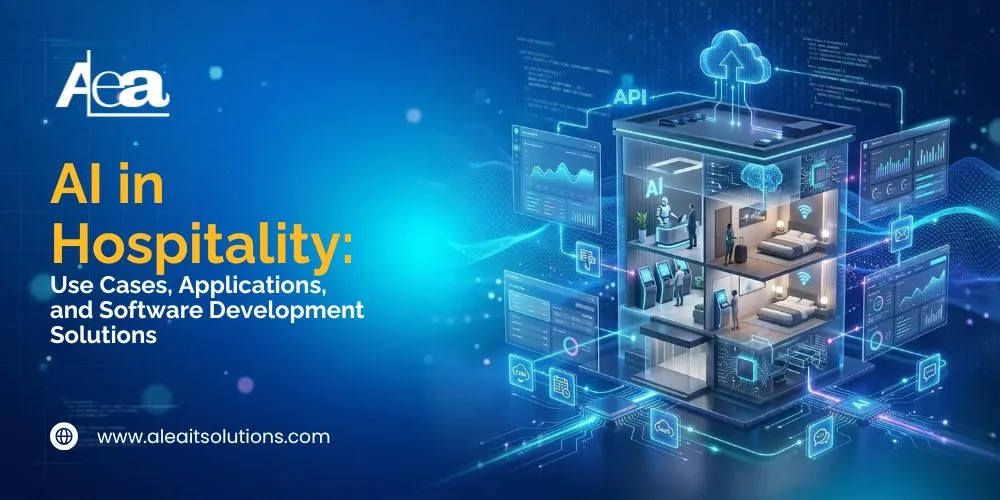
The hospitality sector is rapidly evolving from traditional digital transformation to AI-first operations, where intelligent systems automate processes and enhance customer experiences.
Artificial intelligence in hospitality industry uses technologies like Machine Learning (ML), Natural Language Processing (NLP), and predictive analytics to analyze data, personalize guest journeys, and optimize operational efficiency.
The growing demand for hyper-personalized experiences and ongoing labor shortages are accelerating the adoption of AI in hospitality industry solutions. As businesses look
How AI is Shaping the Modern Hospitality Industry
Artificial intelligence is transforming both operations and customer experience by enabling data-driven decision-making and intelligent automation.
Artificial intelligence in hospitality allows businesses to shift from reactive service to predictive operations, where AI systems analyze customer data to anticipate preferences and deliver personalized experiences.
Many organizations are also adopting “invisible service,” where automation and AI-powered IoT devices manage tasks such as energy optimization, equipment monitoring, and workflow automation in the background.
In addition, AI for hospitality industry solutions integrate key systems like PMS and CRM to create unified dashboards that provide real-time operational insights and improve service efficiency.
Top Use Cases of Artificial Intelligence in Hospitality
The adoption of AI in hospitality industry is enabling businesses to automate operations, enhance customer experiences, and improve decision-making through data-driven insights.
From intelligent booking systems to operational automation, AI in hospitality is transforming multiple areas of service delivery and management.
1. Hyper-Personalized Booking and Recommendation Systems
AI analyzes guest behavior, booking history, and preferences to deliver personalized room recommendations, curated travel packages, and dynamic service bundles that increase conversion rates and customer satisfaction.
2. AI Concierge and Intelligent Chatbots
AI-powered chatbots and virtual assistants provide 24/7 customer support, multilingual communication, booking assistance, and instant responses to common service requests.
3. Smart Room Automation with IoT
AI integrated with IoT devices enables automated room environments, including AI-controlled lighting, climate adjustment, smart curtains, and personalized entertainment systems.
4. AI-Powered Revenue Management
AI-driven analytics monitor demand trends, competitor pricing, and seasonal patterns to enable dynamic pricing strategies and maximize revenue.
5. Predictive Maintenance and Asset Monitoring
AI sensors and monitoring tools detect equipment issues before failures occur, reducing downtime and ensuring uninterrupted service delivery.
6. AI-Based Customer Sentiment Analysis
AI tools analyze online reviews, feedback forms, and social media conversations to identify service gaps and improve overall customer experience.
7. Intelligent Workforce and Staff Scheduling
AI systems analyze demand forecasts and operational workloads to optimize employee scheduling and workforce allocation.
8. AI-Powered Marketing and Personalization
AI helps create personalized promotions, targeted email campaigns, and loyalty programs based on customer preferences and booking behavior.
9. Fraud Detection and Secure Transactions
AI algorithms monitor booking activities and payment transactions to detect suspicious patterns and prevent fraud.
10. Voice Assistants for Guest Services
AI-powered voice assistants allow guests to request services, control room settings, and access information through voice commands.
11. Automated Check-In and Check-Out Systems
AI-driven kiosks and mobile applications enable contactless check-in and check-out processes, reducing waiting time and improving convenience.
Streamlining Hospitality Workflow with Generative AI
Workflow Area |
How Generative AI Streamlines Operations |
Customer Support |
AI chatbots generate instant responses to customer inquiries, booking requests, and service questions. |
Reservation Management |
Automates booking confirmations, modifications, and cancellations through AI-generated responses. |
Personalized Communication |
Generates tailored emails, promotions, and recommendations based on customer preferences. |
Report Generation |
Automatically creates operational reports and summaries from large datasets. |
Data Analysis |
AI tools analyze guest data and generate insights for better decision-making. |
Marketing Automation |
Generates targeted campaigns, promotional content, and customer engagement messages. |
Staff Assistance |
AI assistants help employees access information, summarize reports, and manage tasks efficiently. |
Operational Documentation |
Automatically generates SOPs, service documentation, and operational guidelines. |
Feedback Analysis |
Processes customer reviews and generates summarized insights for service improvement. |
Workflow Automation |
Integrates with hospitality systems to automate routine processes and reduce manual workload. |
Competitive Advantages of Hospitality Artificial Intelligence
- Artificial intelligence in hospitality industry helps businesses increase revenue through intelligent upselling, cross-selling, and personalized promotions based on customer preferences and booking behavior.
- AI-driven analytics enable dynamic pricing strategies that adjust rates according to demand, market trends, and customer data.
- AI for hospitality industry improves operational efficiency by automating routine workflows such as booking management, reporting, and service coordination.
- Automation reduces manual work and accelerates reporting, allowing teams to make faster data-driven decisions.
- AI-powered workforce management tools optimize staff scheduling and allocate resources based on predicted demand.
Discover How Top Hotel Brands Are Leveraging AI to Transform Guest Experiences
- Hilton – Uses AI concierge “Connie” to provide personalized recommendations and improve guest engagement
- Marriott International – Implements AI chatbots and voice assistants for handling bookings and guest queries
- Hyatt – Leverages AI to analyze guest preferences and deliver personalized offers and experiences
- Accor Hotels – Uses AI for dynamic pricing and revenue management based on real-time demand
- InterContinental Hotels Group (IHG) – Applies AI for customer insights, loyalty programs, and targeted marketing
- Wynn Resorts – Integrates AI-powered voice assistants in rooms for smart controls and service requests
- CitizenM – Uses AI-driven automation for self check-in and operational efficiency
What are Some Key Considerations When Implementing AI for Hotels?
- Data Quality & Integration – Ensure accurate, real-time data by integrating PMS, CRM, POS, and ERP systems
- Scalability – AI solutions should support multi-property operations and increasing data volumes
- System Compatibility – Use APIs and middleware for seamless integration with existing systems
- Security & Compliance – Protect guest data and comply with regulations like GDPR
- Cost vs ROI – Evaluate development, infrastructure, and maintenance costs against business value
- Skilled Expertise – Partner with experts or hire ai engineers for implementation and optimization
- Real-Time Processing – Ensure AI systems can process and respond to live data efficiently
- Customization – Build AI models tailored to specific operational and customer needs
How to Develop AI-Integrated Hospitality Software
Developing AI-integrated hospitality software requires a strategic approach that combines advanced technologies with an understanding of hotel operations and guest experience.
By leveraging ai development services, businesses can create intelligent solutions that streamline booking processes, enhance personalized guest interactions, optimize resource management, and provide actionable insights from data.
Step 1: Define Business Goals and KPIs
Start the AI software development process by defining clear business goals. Identify areas where AI can create measurable impact such as improving check-in efficiency, enabling accurate occupancy forecasting, and optimizing revenue management strategies.
Step 2: Build a Unified Data Infrastructure
AI systems require large volumes of data to function effectively. Integrate core platforms such as Property Management Systems (PMS), Point of Sale (POS), Customer Relationship Management (CRM), and ERP systems to create a centralized data ecosystem that supports analytics and automation.
Step 3: Choose the Right AI Technology Stack
Selecting the right technology stack ensures scalability and performance. Python is widely used for building ML models, Node.js supports scalable backend services, cloud platforms handle data processing and deployment, and modern LLM frameworks power chatbots and recommendation engines.
Step 4: Train AI Models Using Hospitality Data
Develop and train machine learning models using historical booking data, operational metrics, and customer behavior patterns. These models can power demand forecasting systems, personalization engines, and intelligent service automation.
Step 5: Pilot Implementation and Continuous Optimization
Deploy the AI system in a controlled pilot environment such as a single property or operational unit. Monitor performance, collect feedback, and continuously improve the models through iterative updates.
Step 6: Implement Human-in-the-Loop Systems
AI shouldn’t replace the ‘hospitality’ in hospitality it should amplify it. By offloading automated responses and complex data processing to intelligent systems, your team can focus on what matters: the guest experience.
Building this synergy requires precision; partnering with an experienced AI software developer ensures your systems are not only smart but also seamlessly integrated into your daily operations.
Read Also: AI development companies in USA
Breaking Down the Cost of AI-Powered Hospitality Software
| Development Component | Estimated Cost (USD) |
| AI Strategy & Consulting | $5,000 – $15,000 |
| Data Integration (PMS, CRM, POS, ERP) | $10,000 – $30,000 |
| AI Model Development | $20,000 – $60,000 |
| AI Chatbots & Automation Systems | $15,000 – $40,000 |
| Smart Analytics Dashboard | $10,000 – $25,000 |
| Testing & Deployment | $5,000 – $15,000 |
| Total Estimated Development Cost | $65,000 – $185,000+ |

Future of AI in the Hospitality Industry
1. AI Travel Agents and Automated Booking Negotiation
The future of AI in hospitality industry will include intelligent travel agents that automatically compare options, negotiate prices, and complete bookings.
In agent-to-agent commerce, personal AI assistants will interact directly with hospitality platforms to find the best deals and personalized packages.
2. AI-Powered Quality Monitoring
AI-driven monitoring systems will help maintain service quality through automated service testing and performance analysis. Synthetic mystery shoppers and AI simulations will evaluate customer interactions and identify service gaps.
3. Sustainable Hospitality Powered by AI
Sustainability initiatives will increasingly rely on ai in hospitality to optimize operations. AI systems will reduce food waste, improve inventory planning, and manage energy consumption through intelligent automation.
4. Voice and Conversational AI Services
Voice assistants and conversational AI will allow customers to control room settings, request services, and access information through natural voice commands.
5. AI-Powered Hyper-Personalization
Future AI platforms will analyse behavioural, location, and contextual data to deliver highly personalized experiences, recommendations, and offers.
How AleaIT Solutions’ AI Platform is Revolutionizing Hotel Operations
AleaIT Solutions’ enterprise AI platform helps hospitality businesses streamline operations and deliver personalized customer experiences through intelligent automation and data-driven insights.
By integrating AI with core systems like CRM, ERP, and booking platforms, the solution enables organizations to centralize data, automate workflows, and improve operational visibility.
Key capabilities include:
- Unified data integration across operational systems
- AI-driven guest personalization and targeted promotions
- Automation of reservations, reporting, and customer interactions
- Predictive analytics for demand forecasting and resource planning
- Real-time dashboards for operational and revenue insights
By implementing AI-powered platforms, hospitality businesses can improve efficiency, enhance customer experiences, and scale their operations more effectively.
Conclusion
Artificial intelligence is transforming hospitality by streamlining operations, analyzing customer data, and enabling predictive decision-making. From intelligent booking systems to AI-driven support and smart resource management, these technologies help deliver more personalized services while boosting efficiency.
As competition grows, investing in AI-powered hospitality platforms gives businesses a competitive edge—optimizing pricing, enhancing service, and enabling faster, data-driven decisions.
The future of hospitality lies in balancing advanced AI technology with human-centered service, creating seamless experiences that strengthen loyalty and drive long-term growth.
FAQs
- How AI is used in hospitality industry?
AI is used in the hospitality industry to automate operations, enhance customer experiences, and improve decision-making. It powers applications like chatbots for guest communication, dynamic pricing systems, personalized recommendations, predictive maintenance, and smart room automation.
- What is AI in hotel industry?
AI in hotel industry refers to the use of technologies such as machine learning, natural language processing, and predictive analytics to streamline operations and deliver personalized guest experiences. It enables automation, data analysis, and intelligent service delivery across hotel systems.
- What is the use of AI in hotel industry?
The use of AI in hotel industry includes automating booking management, optimizing pricing strategies, improving customer support through chatbots, enabling smart room controls, and analyzing guest data for personalization and better service delivery.
- 4. How does AI integrate with hospitality management systems?
AI integrates with management systems through APIs and middleware that connect PMS, CRM, POS, and ERP platforms. This integration is a key use of AI in hotel industry for centralized data processing and operational automation.
- 5.How Much Does It Cost to Develop an AI Hospitality Software App?
The cost of developing an AI hospitality software app depends on complexity, features, and integrations. Typically, it ranges from $40,000 to $400,000, based on requirements such as AI-driven customer service, predictive maintenance, and personalized experiences.