Key Takeaways
- AI workflow automation eliminates manual social media work and saves time
- AI agents can generate, schedule, and publish content automatically
- Tools like n8n and GPT-4 power end-to-end automation
- A structured workflow ensures consistency, scalability, and efficiency
- Multi-platform posting on Facebook and LinkedIn boosts reach
- Businesses can create real-time, data-driven content using APIs
- AI automation improves engagement with smarter scheduling and insights
- Industries like SaaS, healthcare, and finance benefit the most
- Working with an artificial intelligence development company helps scale faster
What is AI-Powered Social Media Automation?
AI-powered social media automation refers to the use of artificial intelligence to streamline, optimize, and execute repetitive social media tasks such as content creation, scheduling, posting, and performance tracking without continuous manual intervention, enabling businesses to maintain consistency and efficiency at scale.
At the core of this system are AI agents autonomous or semi-autonomous systems capable of performing tasks, making decisions, and adapting based on predefined rules and machine learning models allowing them to analyze trends, generate engaging content, and publish posts with minimal human input.
This entire process is driven by structured workflow automation, which defines how tasks move through stages such as Trigger → Data Collection → Content Creation → Approval → Publishing → Analytics, effectively eliminating manual bottlenecks and ensuring seamless execution.
Supporting this ecosystem are powerful tools like n8n for building automated pipelines, along with platforms such as Facebook for audience engagement and LinkedIn for B2B marketing and lead generation.
Why Businesses Need AI Workflow Automation for Social Media
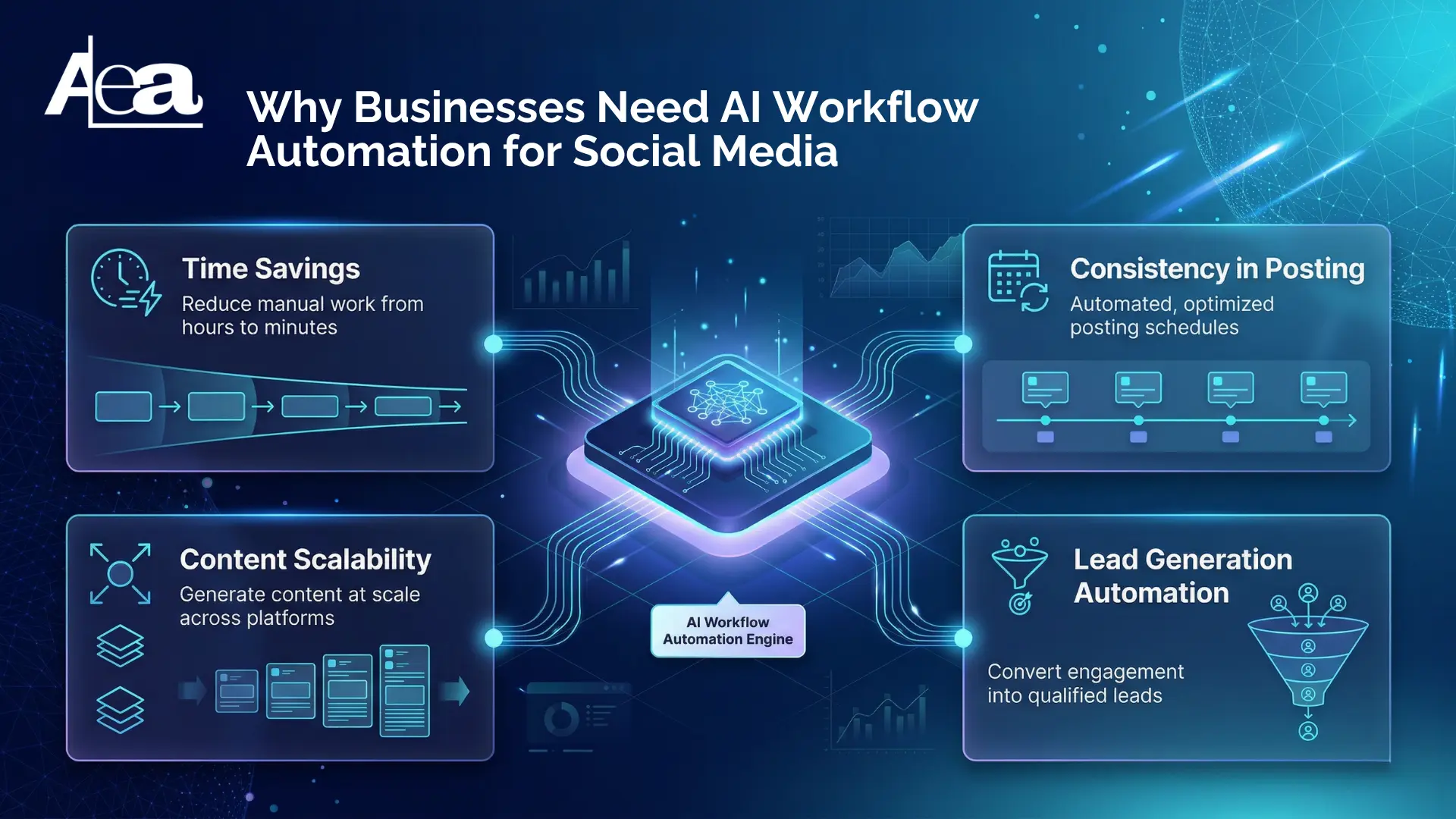
AI-powered workflow automation is no longer optional it has become a strategic necessity for businesses aiming to stay competitive in a fast-paced digital landscape.
With the increasing demand for real-time engagement and consistent brand presence, companies are leveraging advanced workflow platform solutions and intelligent systems to automate repetitive social media tasks while maintaining quality and performance.
1. Time Savings
Manual processes such as content creation, scheduling, and publishing can consume several hours daily. By using an automation platform, businesses can streamline these activities into a unified pipeline, reducing operational time from hours to minutes. This allows teams to focus more on strategy, creativity, and customer engagement rather than repetitive execution.
2. Consistency in Posting
Social media algorithms favor consistency and frequency. Irregular posting can negatively impact visibility and reach. AI-driven systems ensure that content is published at optimal times, maintaining a steady flow of posts without human dependency.
Modern social media automation tools also analyze audience behavior to refine posting schedules for maximum engagement.
3. Content Scalability
Scaling content production manually requires significant resources, including writers, designers, and marketers. AI eliminates this constraint by generating high-quality content in bulk captions, hashtags, and even visuals across multiple platforms simultaneously. Businesses can expand their digital presence without proportionally increasing costs or team size.
4. Lead Generation Automation
AI agents go beyond posting they actively contribute to business growth. By analyzing user behavior, trends, and engagement patterns, they can create highly targeted content that attracts potential customers.
Automated funnels can nurture these leads through consistent communication, personalized messaging, and timely follow-ups, significantly improving conversion rates.
Key Features of AI-Powered Social Media Automation Tools
- Auto Content Generation (AI):
Uses large language models within Ai social media automation systems to automatically generate high-quality captions, relevant hashtags, and engaging social media posts. These systems can adapt tone, style, and messaging based on the target audience, helping brands maintain consistency while significantly reducing manual effort.
- News/Data Fetching (APIs):
Leverages an advanced automation platform to connect with RSS feeds, news APIs, and industry-specific data sources. This enables businesses to publish real-time, trend-driven content, keeping their social media presence relevant, informative, and aligned with current market conversations.
- Image Generation:
Creates AI-powered visuals, including promotional graphics, banners, and post creatives that align with brand identity. This ensures every post is visually appealing and consistent, improving engagement without requiring a dedicated design team for each piece of content.
- Scheduled Posting:
Built into the system to automatically publish content at optimal times based on audience activity and historical engagement data. This removes the need for manual scheduling while ensuring maximum reach, visibility, and interaction for each post.
- Multi-Platform Publishing:
Powered by social media automation tools, it enables seamless content distribution across platforms like Facebook and LinkedIn. The system can also tailor content formats for each platform, ensuring consistent branding while optimizing performance across channels.
How AI Workflow Automation for Social Media Works (Architecture Overview)
AI workflow automation for social media follows a structured, modular system that automates the entire content lifecycle from content discovery to publishing and performance tracking. This architecture ensures scalability, consistency, and efficiency without manual effort.
Understanding this flow helps businesses design smarter automation systems and scale their content strategy effectively.
1. Trigger Layer (Workflow Initiation)
Every automation begins with a trigger. This can be a scheduled event (such as a cron job) or a real-time action. Tools like n8n allow workflows to run automatically at defined intervals, eliminating the need for manual execution.
2. Data Source Layer (Content Input)
The system pulls content from multiple data sources such as APIs, RSS feeds, or cloud storage platforms like Google Drive. This ensures a continuous flow of fresh, relevant, and industry-specific content.
3. Processing Layer (Filtering & Validation)
Before content moves forward, it is cleaned and validated. This includes removing duplicates, filtering irrelevant data, and structuring the content for further processing within the automation workflow.
4. AI Engine (Content Generation)
AI models like GPT-4 power content creation by generating captions, hashtags, and summaries. This layer enables scalable AI-powered social media content creation while maintaining brand voice and engagement quality.
5. Automation Layer (Content Structuring & Scheduling)
The automation engine organizes and prioritizes content based on predefined rules. It determines what to post, when to post, and how to structure content for different platforms.
6. Output Layer (Multi-Platform Publishing)
Content is automatically distributed across platforms such as Facebook and LinkedIn, ensuring consistent multi-channel presence and maximum reach.
7. Analytics Layer (Tracking & Optimization)
After publishing, the system tracks engagement metrics like clicks, impressions, and interactions. This data is used to continuously optimize future content and improve overall automation performance.
Step-by-Step Guide to Build an AI Social Media Automation Workflow Using n8n
This guide walks you through building a complete AI-powered social media automation system using n8n, APIs, and AI models like GPT-4.
Step 1: Set Up n8n Workflow Automation Platform
Start by installing n8n (cloud or self-hosted) to create your automation environment.
- Create a new workflow
- Configure a trigger (cron/schedule-based)
- Define execution intervals for automated runs
This forms the foundation of your AI workflow automation system.
Step 2: Fetch Content Using APIs
Integrate data sources to pull real-time content.
- Connect RSS feeds or news APIs (e.g., GNews)
- Fetch industry-specific content
- Clean and structure the data for processing
This ensures your automation system always has fresh and relevant content.
Step 3: Generate Social Media Content with AI
Use AI models like GPT-4 or Google Gemini to create content.
Example prompt:
“Generate a LinkedIn post summarizing this article in a professional tone with relevant hashtags.”
This step powers AI-driven content creation, making your social media automation scalable and efficient.
Step 4: Create Images for Posts (Optional)
Enhance your posts with AI-generated visuals.
- Use AI image generation tools
- Maintain brand consistency (colors, fonts, tone)
- Create platform-specific creatives
Visual content significantly improves engagement and reach.
Step 5: Auto-Post to Social Media Platforms
Integrate publishing APIs to automate posting.
- Connect platforms like Facebook and LinkedIn
- Configure scheduling nodes
- Optimize posting time for better engagement
This ensures seamless multi-platform publishing without manual effort.
Step 6: Test & Optimize Your Workflow
Before scaling, test your automation system.
- Debug workflow errors
- Validate data flow between nodes
- Track performance metrics
Continuously optimize:
- AI prompts
- Posting schedule
- Content structure
This step ensures your AI workflow automation system performs efficiently at scale.
Real-World Use Cases of AI Social Media Automation
-
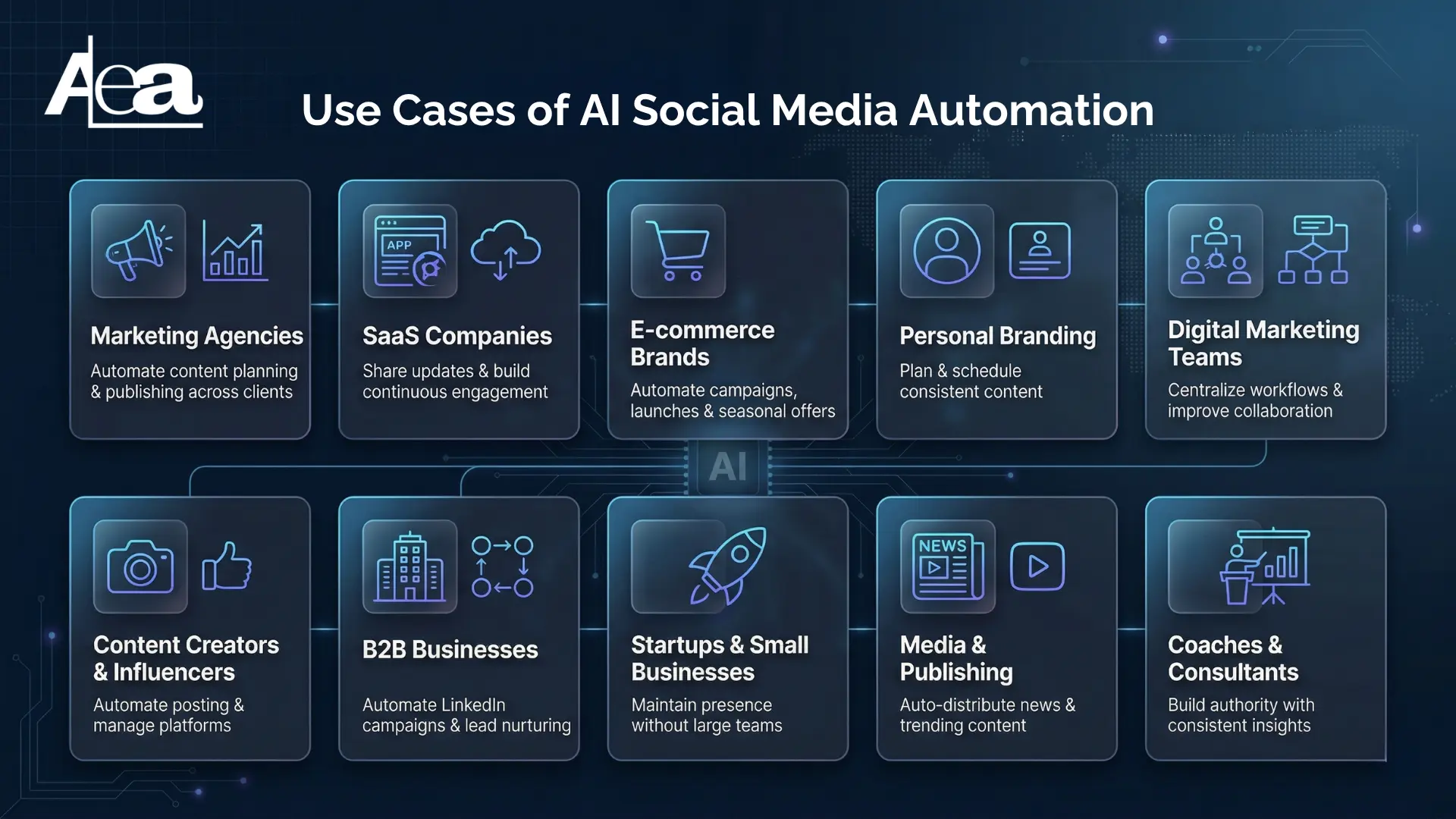
Marketing Agencies:
Agencies use workflow automation to streamline content planning, approval, and publishing across multiple client accounts. This reduces manual workload, ensures timely delivery, and improves campaign consistency while boosting overall ROI.
-
SaaS Companies:
SaaS brands rely on Ai social media automation to consistently share product updates, feature releases, and educational content, helping them build authority and maintain continuous engagement with their audience.
-
E-commerce Brands:
Online stores implement ai workflow automation to automate promotional campaigns, product launches, and seasonal offers, allowing them to scale marketing efforts without increasing operational complexity.
-
Personal Branding:
Professionals leverage a structured workflow platform to plan and schedule content in advance, ensuring a consistent online presence and stronger personal brand visibility.
-
Digital Marketing Teams:
Teams utilize an automation platform to centralize social media activities, from content creation to analytics, improving collaboration and reducing execution time.
-
Content Creators & Influencers:
With the help of social media automation tools, creators can automate posting schedules, manage multiple platforms, and focus more on content strategy and audience engagement.
-
B2B Businesses:
Companies adopt a workflow automation platform to manage LinkedIn-focused campaigns, automate lead nurturing content, and maintain consistent communication with prospects.
-
Startups & Small Businesses:
These businesses use social media post automation to maintain active profiles without hiring large marketing teams, helping them compete with larger brands efficiently.
-
Media & Publishing Companies:
Organizations leverage ai automation tools to automatically generate and distribute news updates, articles, and trending content across social channels in real time.
-
Coaches & Consultants:
Experts use ai for social media content to create insightful posts, tips, and thought leadership content, enabling them to build credibility and attract potential clients consistently.
Top AI Social Media Automation Tools & Platforms You Need
1. n8n – The Automation Engine
n8n acts as the central hub of your AI workflow automation system. It allows you to design workflows using a visual, no-code interface to automate tasks like content fetching, data processing, and social media posting. Being open-source and self-hostable, it provides full flexibility and control over your automation stack.
2. OpenAI (GPT-4) – The Content Generator
AI models like GPT-4 power content creation by generating captions, hashtags, and full social media posts. They can also summarize articles and transform raw data into engaging, platform-ready content at scale.
3. Zapier / Make – The Integration Layer
Tools like Zapier and Make (Integromat) connect different apps using no-code automation. They enable trigger-based workflows, making it easy to automate repetitive tasks across your tech stack.
4. Google Drive & Google Sheets – The Data Layer
Google Drive stores media assets, while Google Sheets acts as a lightweight database to manage content calendars, track publishing status, and monitor performance.
5. Buffer API / LinkedIn API – The Publishing Layer
APIs like Buffer and LinkedIn handle automated publishing. They ensure your content is posted at the right time with proper formatting across platforms.
6. Python – The Custom Logic Engine
Python is used for advanced automation tasks such as data cleaning, file processing, and custom logic implementation that goes beyond standard no-code tools.
7. Notion / Airtable – The Planning & Management Layer
Notion and Airtable help manage content calendars, organize ideas, and collaborate with teams. They can also integrate with automation workflows for real-time updates.
Top Industries That Benefit from AI Workflow Automation (Use Cases & Examples)
AI workflow automation delivers significant impact across multiple industries by improving efficiency, scalability, and engagement through intelligent systems.
-
Healthcare
The healthcare sector uses workflow automation to streamline patient engagement, automate appointment reminders, and run awareness campaigns. This helps providers improve communication, reduce administrative burden, and enhance overall patient experience.
2. Finance
Financial institutions leverage Ai social media automation to share market updates, financial insights, and compliance-driven communication, ensuring timely and regulated content delivery while maintaining customer trust.
3. Real Estate
Real estate businesses adopt ai workflow automation to automate property listings, promotions, and lead nurturing campaigns, allowing agents to focus more on conversions while maintaining consistent outreach.
4. IT & SaaS
Companies in this sector rely on a structured workflow platform to manage product marketing, release updates, and educational content, ensuring consistent engagement with users and prospects.
5. Education
Educational institutions use an automation platform to promote courses, manage student communication, and automate engagement campaigns, improving enrollment rates and overall student interaction.
Challenges in Building AI Automation Systems
- API Limitations: APIs often come with rate limits, restricted endpoints, and frequent updates that can disrupt integrations, affecting data flow and posting reliability across platforms.
- Content Quality: AI-generated content may lack accuracy, context, or brand alignment, requiring human oversight to maintain quality and relevance.
- Platform Restrictions: Social platforms like Facebook and LinkedIn enforce strict posting limits, API usage rules, and content guidelines that must be followed.
- Scaling Issues: As workflows grow in complexity, managing large volumes of data and multi-platform automation requires strong and scalable infrastructure.
- Integration Complexity: Connecting multiple APIs, tools, and systems within a single workflow can be technically challenging and may lead to compatibility or maintenance issues.
- Performance Monitoring: Tracking performance, debugging errors, and continuously optimizing automation workflows is essential but can become difficult as the system scales.
Why Choose an AI Agent Development Company?
Building production-grade AI automation systems requires more than basic setup it involves technical expertise, strategic planning, and scalable architecture design. Partnering with an ai agent development company ensures your automation solution is efficient, reliable, and aligned with your business goals.
With the right expertise, businesses can develop custom AI workflows tailored to their operations, enabling better efficiency and reduced manual effort. These companies also design scalable automation architectures that can handle growth and multi-platform execution seamlessly.
Additionally, they provide advanced API integrations to connect various tools and platforms, along with strong security and compliance measures to protect data and meet industry standards.
Overall, working with an experienced partner helps businesses build robust, future-ready automation systems that drive productivity and long-term growth.
How Our AI Agent Solutions Can Help Your Business
Our AI Agent Solutions are designed to deliver end-to-end automation tailored to your business needs, helping you streamline operations and achieve measurable growth. From initial planning to deployment, we provide complete AI agent development that covers every stage of the automation lifecycle.
We build custom automation pipelines that align with your specific workflows, ensuring maximum efficiency and reduced manual effort.
Our solutions also support seamless multi-platform integration, allowing your systems to connect and operate smoothly across various tools and channels.
Additionally, we offer continuous monitoring and support to ensure optimal performance, quick issue resolution, and ongoing improvements.
Conclusion
AI-powered social media automation is transforming how businesses create, manage, and scale their digital presence. By combining intelligent systems, structured workflows, and advanced tools, companies can move beyond manual processes and adopt a more efficient, data-driven approach to social media management.
From automated content generation to multi-platform publishing, AI agents enable consistency, speed, and scalability that traditional methods cannot match.
As competition continues to grow, leveraging AI-driven automation is no longer a luxury but a necessity for staying relevant and achieving sustainable growth.
Businesses that invest in the right tools, architecture, and expertise—often with the support of an experienced artificial intelligence development company can significantly improve productivity, enhance engagement, and drive better results from their social media efforts.
Frequently Asked Questions
An AI agent automates content creation, scheduling, and posting using machine learning and workflow automation tools.
Yes, using APIs and platforms like n8n, AI agents can schedule and publish posts automatically.
Industries like marketing, e-commerce, SaaS, healthcare, and finance benefit significantly.
n8n is more flexible and developer-friendly, while Zapier is easier for beginners.
Costs vary based on complexity, integrations, and scalability requirements, ranging from basic setups to enterprise-grade systems.