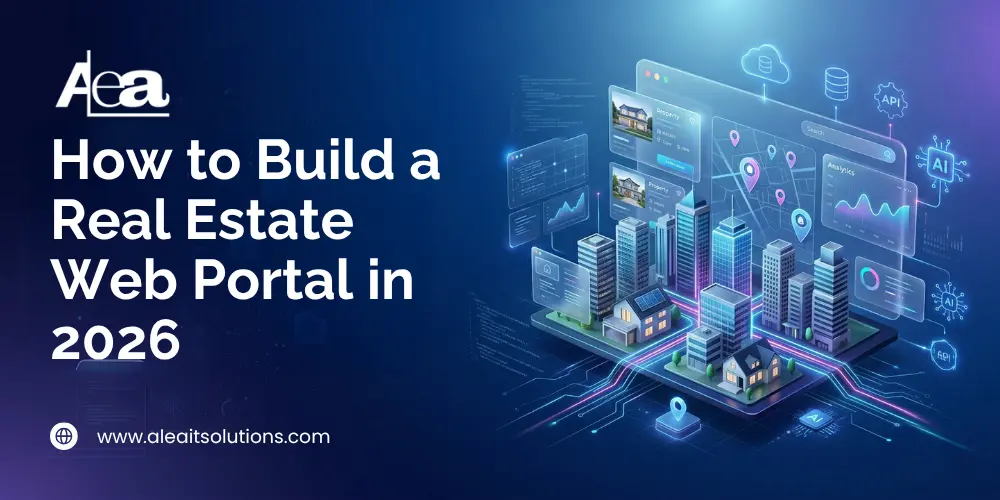
The real estate industry is rapidly shifting toward digital ecosystems, driven by the growth of PropTech. The global PropTech market, valued at over $47 billion in 2025, is projected to exceed $185 billion by 2034, reflecting the increasing adoption of technology-driven property solutions.
Today, buyers and investors prefer online platforms for property search, comparison, and transactions, making digital presence essential.
However, traditional real estate websites often fail due to their lack of scalable architecture, limited integrations, and inability to handle large volumes of listings and real-time data. This is where real estate web portal development becomes critical.
It enables businesses to build scalable, high-performance platforms that support multiple users, advanced search capabilities, and seamless integrations, ultimately improving lead generation and overall business efficiency.
What is a Real Estate Web Portal?
A real estate web portal is a multi-sided platform that connects buyers, sellers, agents, and admins within a single ecosystem. Built using web portal development, it enables centralized property management and seamless user interactions.
Unlike static real estate websites with limited functionality, dynamic property portals (like Zillow) use modern web app development to support real-time updates, advanced search, and scalable performance.
Technically, it includes key components such as a listing engine for managing property data, a search engine for fast and filtered queries, and a user management system for handling authentication, roles, and access control.
Market Insights & Industry Analysis
Understanding market dynamics is the foundation of successful real estate web portal development. Before building a platform, it is essential to analyze user behavior, competitor strategies, and emerging technology trends shaping the PropTech landscape.
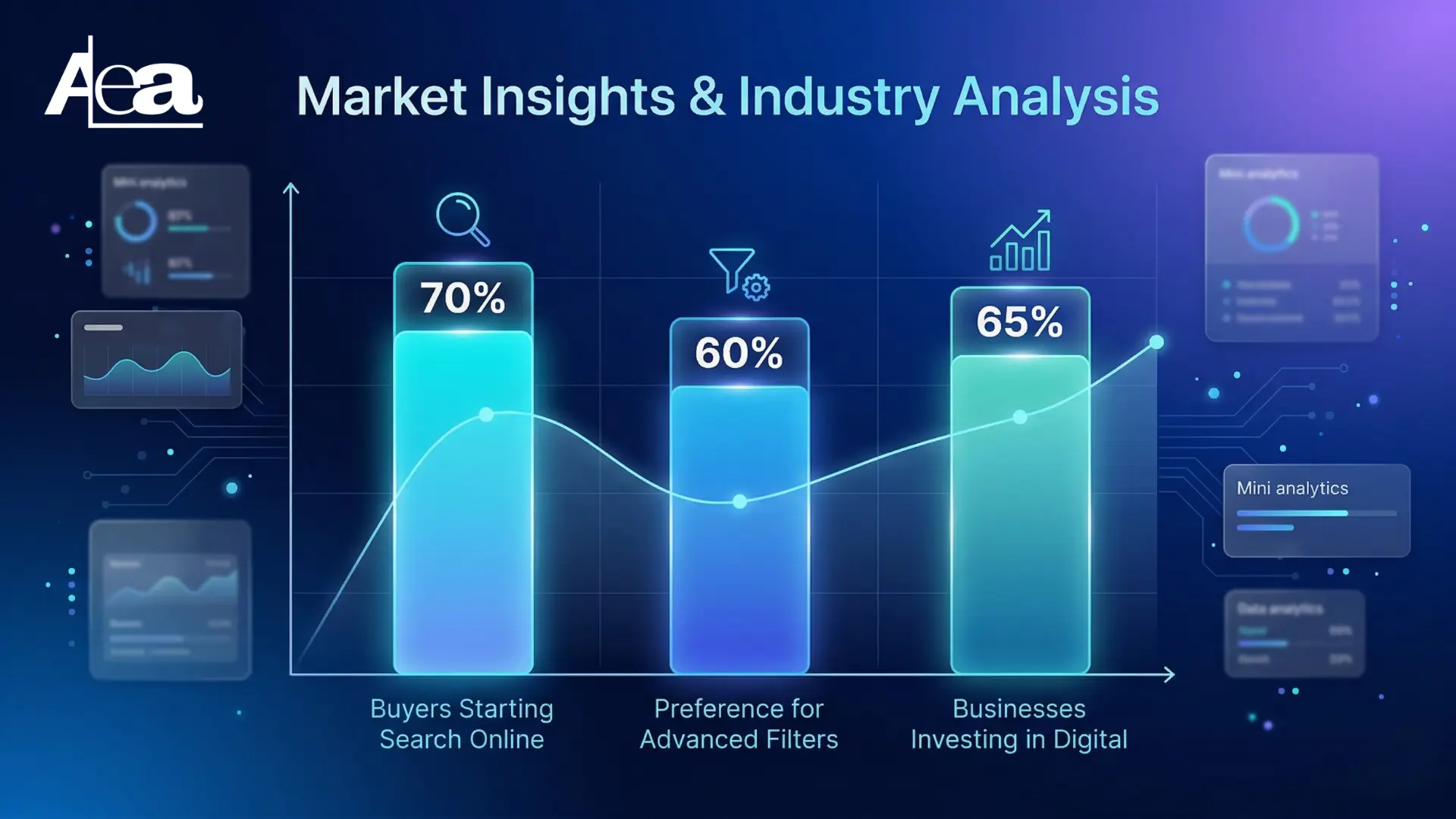
Recent industry surveys indicate that over 70% of property buyers start their search online, while nearly 60% prefer platforms with advanced filters and real-time updates.
Additionally, more than 65% of real estate businesses are investing in digital platforms to improve lead generation and operational efficiency. These insights highlight the growing demand for scalable and feature-rich portals.
From a competitive standpoint, leading platforms focus heavily on user experience, AI-driven recommendations, and seamless integrations. Businesses entering this space must evaluate competitor features, pricing models, and technology stacks to identify gaps and opportunities.
By leveraging these insights, companies can define a clear product roadmap, prioritize high-impact features, and build a data-driven strategy that ensures long-term success in the digital real estate market.
Why Real Estate Web Portal Development is Essential for Modern Property Businesses
Modern property businesses operate in a fast-paced, digital-first market where user expectations are constantly evolving. Investing in web portal development helps create centralized platforms that improve property discovery, user engagement, and operational efficiency.
Advanced platforms go beyond traditional websites by enabling real-time data processing and dynamic user experiences. With a strategic approach, businesses can ensure strong performance, security, and search visibility driving higher traffic and conversions.
Key Reasons Why It’s Essential
- Centralized Property Management with Web Portal Development- A web portal enables businesses to manage listings, user data, and transactions from a single interface, improving operational efficiency.
- Advanced Search & UX Powered by Web App Development- Features like smart filters, location-based search, and personalized recommendations help users find relevant properties quickly.
- Improved Lead Generation through Web Development Strategies- Built-in inquiry forms, chat systems, and CRM integrations streamline the process of capturing and nurturing leads.
- Scalability with Web Portal Development- Designed to handle high traffic volumes, large datasets, and multiple user roles without performance issues.
How AI Mobile Applications Strengthen Real Estate Web Portal Performance
A real estate web portal built through web portal development can efficiently manage property listings and search, but integrating a mobile application especially with the support of an ai mobile app development company takes user engagement to the next level.
With most users browsing properties on smartphones, mobile apps enable instant access to listings along with real-time updates such as new property alerts, price changes, and saved searches, significantly improving retention.
With modern web app development, platforms can sync data seamlessly between web and mobile, ensuring consistent user experiences across devices. AI-powered mobile apps also leverage device capabilities like GPS for location-based results and cameras for quick listing uploads by agents, while enhancing recommendations through intelligent algorithms.
A strong web development strategy ensures smooth integration between the portal and mobile app, creating a unified ecosystem. Although it requires additional investment, this approach enhances accessibility, boosts engagement, and drives higher conversions.
Related Insights : Top Web Development Companies in USA
Core Features of a Real Estate Web Portal With AI
| Feature | Description |
| Advanced Property Search & Filtering (User) | Enables users to find properties based on specific criteria, forming the core of user experience. |
| Interactive Maps Integration (User) | Provides location-based visualization of properties. |
| Saved Searches & Alerts (User) | Allows users to save preferences and receive updates. |
| Virtual Tours & Media Galleries (User) | Enhances property viewing experience digitally. |
| Property Listing Management Dashboard (Agent/Admin) | Interface for managing and monitoring listings. |
| Lead Management System – CRM Integration (Agent/Admin) | Helps capture and manage leads efficiently. |
| Analytics & Reporting (Agent/Admin) | Provides insights into platform and listing performance. |
| Role-Based Access Control (Agent/Admin) | Ensures secure and structured access to the platform. |
| AI Property Recommendations (AI Feature) | Suggests properties based on user behavior and preferences. |
| Price Prediction Algorithms (AI Feature) | Estimates property values using data-driven models. |
| Chatbots for Lead Qualification (AI Feature) | Automates initial user interaction and support. |
| Image Recognition for Property Tagging (AI Feature) | Automates tagging and classification of property images. |
Types of Real Estate Portals You Can Build
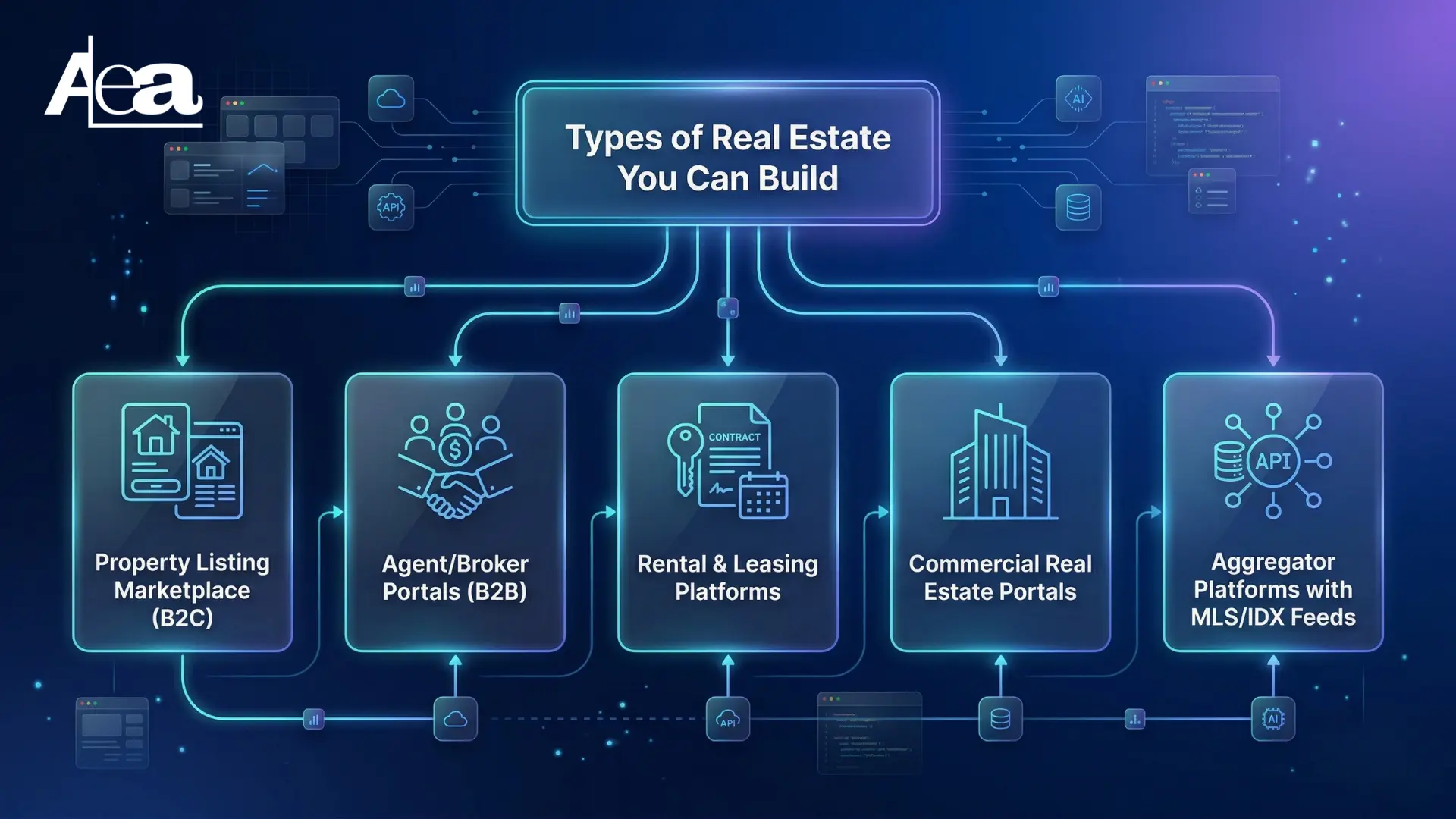
Real estate businesses can develop different types of portals based on their target audience and business model. With the right approach to web portal development, each type can be tailored for scalability, performance, and user engagement.
- Property Listing Marketplace (B2C)- Platforms designed for buyers and sellers to explore, compare, and purchase properties directly.
- Agent/Broker Portals (B2B)- Dedicated systems for real estate professionals to manage listings, leads, and client interactions, often built using advanced web app development techniques.
- Rental & Leasing Platforms- Focused on short-term and long-term rentals, offering features like availability tracking and tenant management.
- Commercial Real Estate Portals- Specialized platforms for officRemove featured imagees, retail spaces, and industrial properties, requiring a strong web development foundation for handling complex data.
- Aggregator Platforms with MLS/IDX Feeds- Large-scale portals that collect and display listings from multiple sources, typically developed through custom web portal development to support integrations and high data volumes.
Real Estate Platform Apps We Develop
| App Type | AI Integration |
| Property Listing App | AI-based property recommendations, personalized search results, and smart filters based on user behavior. |
| Agent/Broker Management App | AI-powered lead scoring, automated follow-ups, and predictive insights for better conversion. |
| Rental & Leasing App | AI-driven tenant matching, rent prediction models, and automated reminders for payments and renewals. |
| Real Estate CRM App | AI chatbots for lead qualification, behavior analysis, and automated communication workflows. |
| Property Analytics App | AI-based price prediction, market trend analysis, and investment forecasting. |
| Aggregator App (MLS/IDX Integrated) | AI-powered data normalization, duplicate detection, and intelligent search ranking. |
| Virtual Property Tour App | AI-enhanced image recognition, AR/VR integration, and automated property tagging. |
Real Estate Portal Development Process
| Step | Description | Estimated Cost |
| Requirement Analysis | Define business goals, user roles, features, and technical scope along with market research. | $1,000 – $3,000 |
| UI/UX Wireframing | Design wireframes, user flows, and prototypes focused on user experience and conversions. | $2,000 – $5,000 |
| MVP Development | Develop core features such as property listings, search functionality, user authentication, and backend systems. | $10,000 – $25,000 |
| API & Integrations | Integrate third-party services like Google Maps, CRM systems, payment gateways, and MLS/IDX APIs. | $3,000 – $10,000 |
| Testing (Functional + Performance) | Conduct QA testing, bug fixing, and optimize performance, scalability, and security. | $2,000 – $6,000 |
| Deployment (CI/CD Pipelines) | Set up servers, CI/CD pipelines, and deploy the application with monitoring tools. | $1,000 – $4,000 |
Technology Stack for Real Estate Portal Development
|
Category |
Technology |
| Frontend | React.js / Next.js, Vue.js (Optional) |
| Backend | Node.js, Ruby on Rails, Django |
| Database | PostgreSQL, MongoDB |
| Integrations | Google Maps API, Payment Gateways, CRM Systems (Salesforce, HubSpot), MLS/IDX APIs |
Security & Compliance
- Data Encryption (SSL, HTTPS)- Ensures secure data transmission between users and servers using encryption protocols, protecting sensitive information like user details and transactions.
- GDPR & Data Privacy Compliance- Implements data protection regulations, including user consent, data storage policies, and privacy controls to safeguard user information.
- Secure Authentication (OAuth, JWT)- Uses advanced authentication mechanisms such as OAuth and JWT for secure login, session management, and role-based access.
- Protection Against Scraping & Fraud- Applies measures like rate limiting, CAPTCHA, IP blocking, and bot detection to prevent data scraping, spam, and fraudulent activities.
Monetization Models for Real Estate Portals
- Featured Listings- Property owners and agents can pay to highlight their listings at the top of search results or in premium sections. This increases visibility, attracts more inquiries, and generates consistent revenue for the platform.
- Subscription Plans for Agents- Agents and brokers can subscribe to monthly or yearly plans to access advanced features such as listing management, analytics, and lead tracking. This creates a recurring revenue stream while offering added value to professionals.
- Lead Selling Model- The platform can generate and sell qualified leads to agents based on user inquiries and search behavior. This performance-based model ensures agents pay for high-intent prospects, improving ROI.
- Ads & Sponsored Properties- Businesses and developers can run targeted ads or sponsor property listings on the platform. This includes banner ads, promoted listings, and homepage placements, helping increase brand visibility while monetizing traffic.
Future Trends in Real Estate Portal Development
1. AI-Driven Property Valuation
Advanced AI models are being used to estimate property prices based on historical data, location trends, and market demand. This enables more accurate pricing, better investment decisions, and real-time valuation updates within the portal.
2. AR/VR Property Tours
Augmented and virtual reality technologies are transforming how users explore properties. Virtual tours allow buyers to experience properties remotely, reducing the need for physical visits and improving engagement.-
3. Blockchain in Real Estate Transactions
Blockchain introduces transparency and security in property transactions by enabling smart contracts, secure ownership records, and fraud-resistant documentation. This reduces dependency on intermediaries and speeds up transactions.
4. Voice Search Optimization
With the rise of voice assistants, real estate portals are integrating voice search capabilities. Users can search properties using natural language queries, making the platform more accessible and improving search experience.
How AleaIT Solutions Can Help in Developing AI Real Estate Web Portals
AleaIT Solutions delivers smart, scalable real estate web portals powered by AI to boost user engagement and conversions. Their solutions focus on seamless UI/UX, SEO-friendly architecture, and high-performance development tailored for modern property businesses.
From planning to deployment, they provide end-to-end services including advanced property search, CRM integration, and third-party APIs. With AI capabilities like personalized property recommendations, automated lead management, and real-time analytics, they help businesses make smarter, data-driven decisions.
With secure, future-ready real estate app development and ongoing support, AleaIT empowers real estate platforms to grow faster, engage users better, and maximize ROI.
Conclusion
In the fast-evolving real estate market, investing in custom web development is no longer optional it’s essential. A scalable, high-performance platform ensures seamless property management, advanced search, and engaging user experiences that drive leads and conversions.
By integrating AI-powered features and following a SEO-ready web development strategy, businesses can outperform competitors and deliver exceptional value to users.
Ready to transform your property business? Partner with AleaIT Solutions to build a future-ready real estate platform that combines innovation, scalability, and intelligence, designed to grow with your business.
FAQs
1. How does AI enhance a real estate platform?
AI supports property recommendations, price prediction, tenant matching, and lead qualification. It automates tasks, personalizes user experience, and provides actionable insights for better decision-making.
2. How can mobile apps be integrated with a real estate web portal?
Mobile apps can be integrated via RESTful APIs or GraphQL to sync data in real time. This ensures consistent listings, user profiles, and notifications across web and mobile platforms.
3. What technologies are used in modern real estate web development?
Leading portals use React.js/Next.js or Vue.js for frontend, Node.js, Django, or Ruby on Rails for backend, PostgreSQL or MongoDB for databases, and integrate APIs like Google Maps, payment gateways, and MLS/IDX feeds.
4. How much does it cost to develop a real estate portal?
Costs vary depending on features, integrations, and AI functionalities. Typical ranges: Requirement Analysis ($1K–$3K), UI/UX Design ($2K–$5K), MVP Development ($10K–$25K), and API Integrations & Testing ($3K–$16K).
5. How long does it take to develop a real estate web portal?
Development time can range from 3 to 6 months for a standard platform and up to 9–12 months for a fully featured, AI-powered scalable solution, depending on complexity and integrations.
6. How can AleaIT Solutions help?
AleaIT Solutions offers end-to-end real estate software development services, including custom web portal development, AI app development services, and integration of advanced features for a future-ready, scalable, and intelligent property platform.
7. What are the must-have features of a modern real estate web portal?
Essential features include property listings, advanced search filters, user dashboards, AI recommendations, chat support, virtual tours, CRM integration, and analytics dashboards.