From 3 Weeks to 1 Week: AI...
Built a multi-channel AI recruitment agent combining automated phone screening, predictive attrition modeling, and multilingual...
View Case Study




The client is a mid-sized manufacturing and distribution enterprise with operations across multiple locations. Their teams relied on separate ERP modules, CRM screens, HR systems, and analytics dashboards to access day-to-day operational data. As the business scaled, employees spent increasing time navigating between systems just to find answers to simple questions pulling revenue reports from finance modules, checking project timelines in PM tools, or verifying leave balances in HR portals.
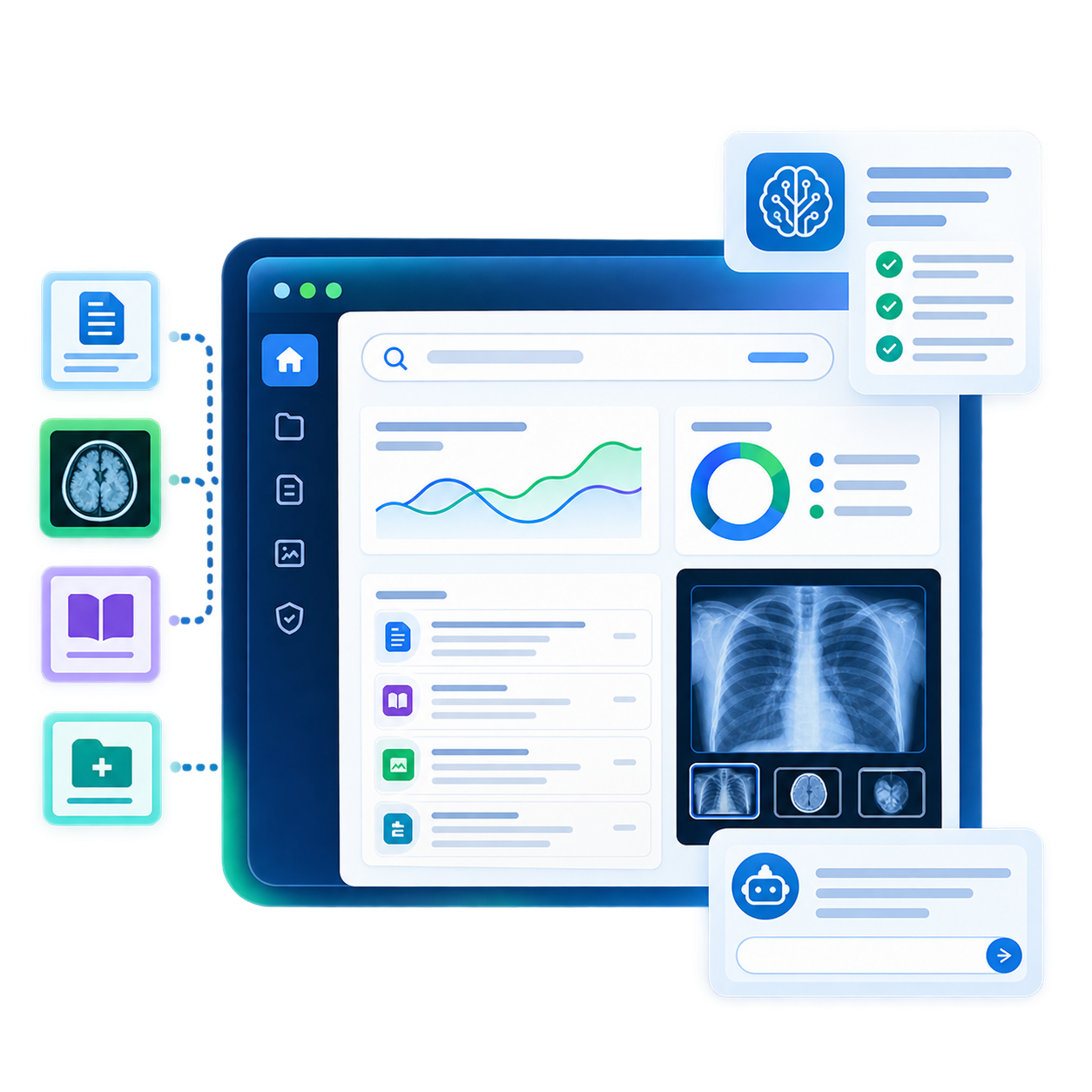
The core problem wasn’t data availability it was data accessibility. Employees knew the information existed somewhere in their systems, but retrieving it required knowing exactly which dashboard, report, or module to open. We designed and implemented a voice-first enterprise intelligence layer that sits on top of existing systems, allowing employees to ask natural-language questions and receive contextual, governed answers without opening multiple applications.

ERP, CRM, HR & Analytics

Voice & Natural-Language Queries

Context-Driven Queries

Data Access
An employee asks a question out loud no dashboard, no report, no knowing which department owns the data.
A team member asks something like “What’s our revenue this month?” or “Which projects are delayed?” in plain conversational language, the way they’d ask a colleague.
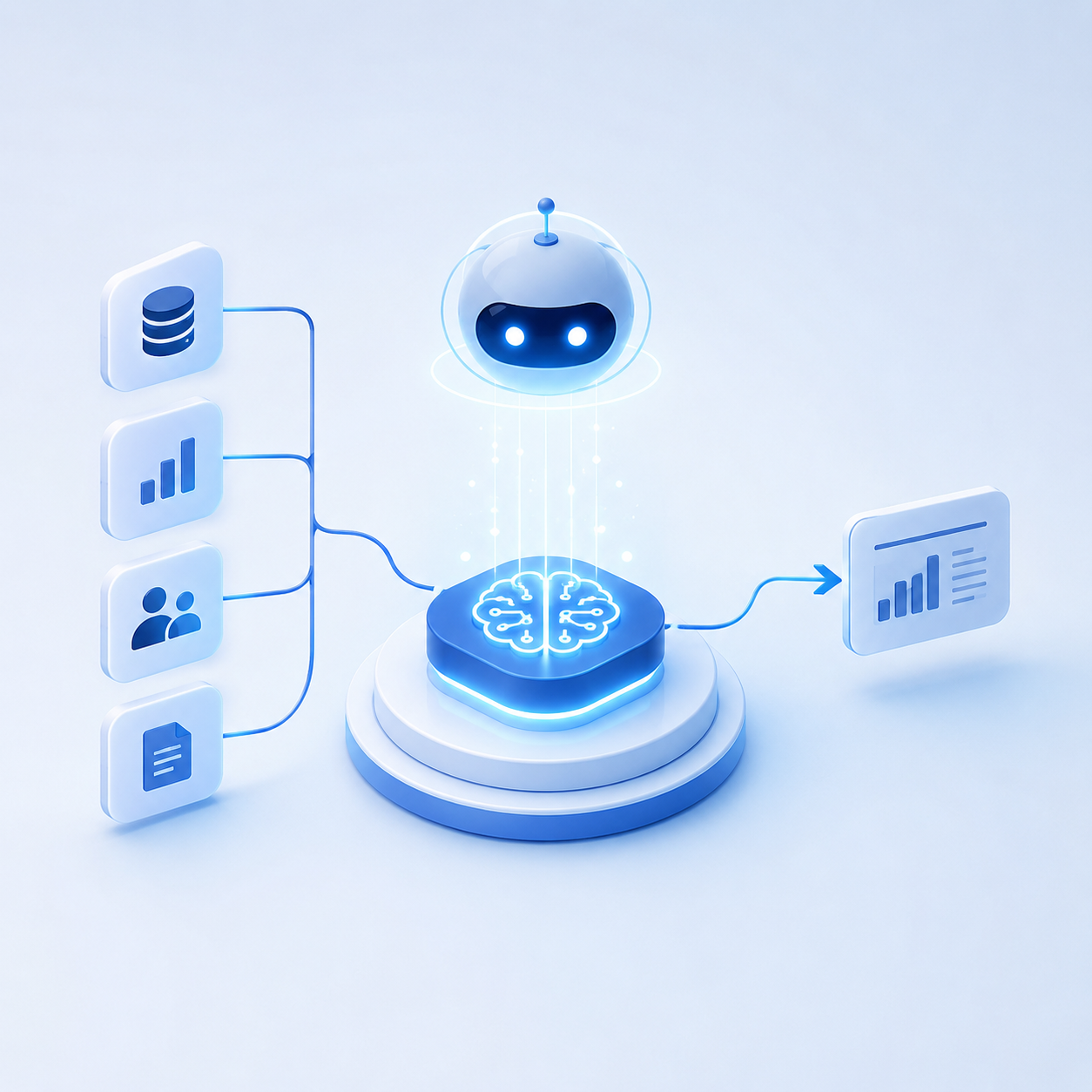
We built a language layer that reads the intent behind the question not just the keywords so “why did revenue drop” is understood as a request for a comparison and an explanation, not a single number.
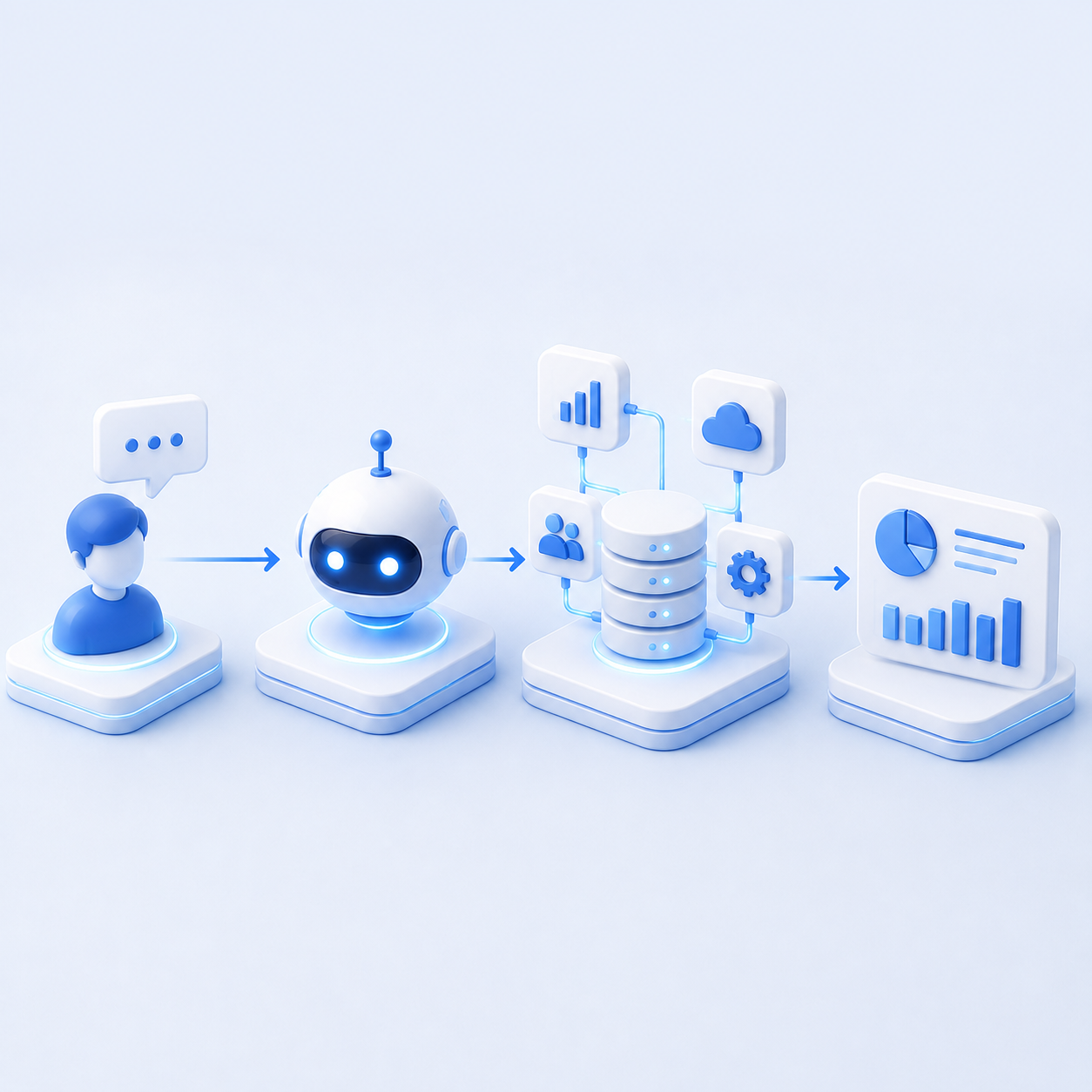
Instead of guessing at an answer, the question is routed to the actual system of record — ERP, CRM, HR, or reporting — so what comes back is grounded in real, current company data.
When an answer needs more than one source say, revenue from the ERP and project status from the reporting tool we built the logic to pull from both and reconcile them into one coherent answer.
The employee gets a direct, conversational answer instead of a raw table or a dashboard link, with the option to ask a natural follow-up the same way they would to a person.
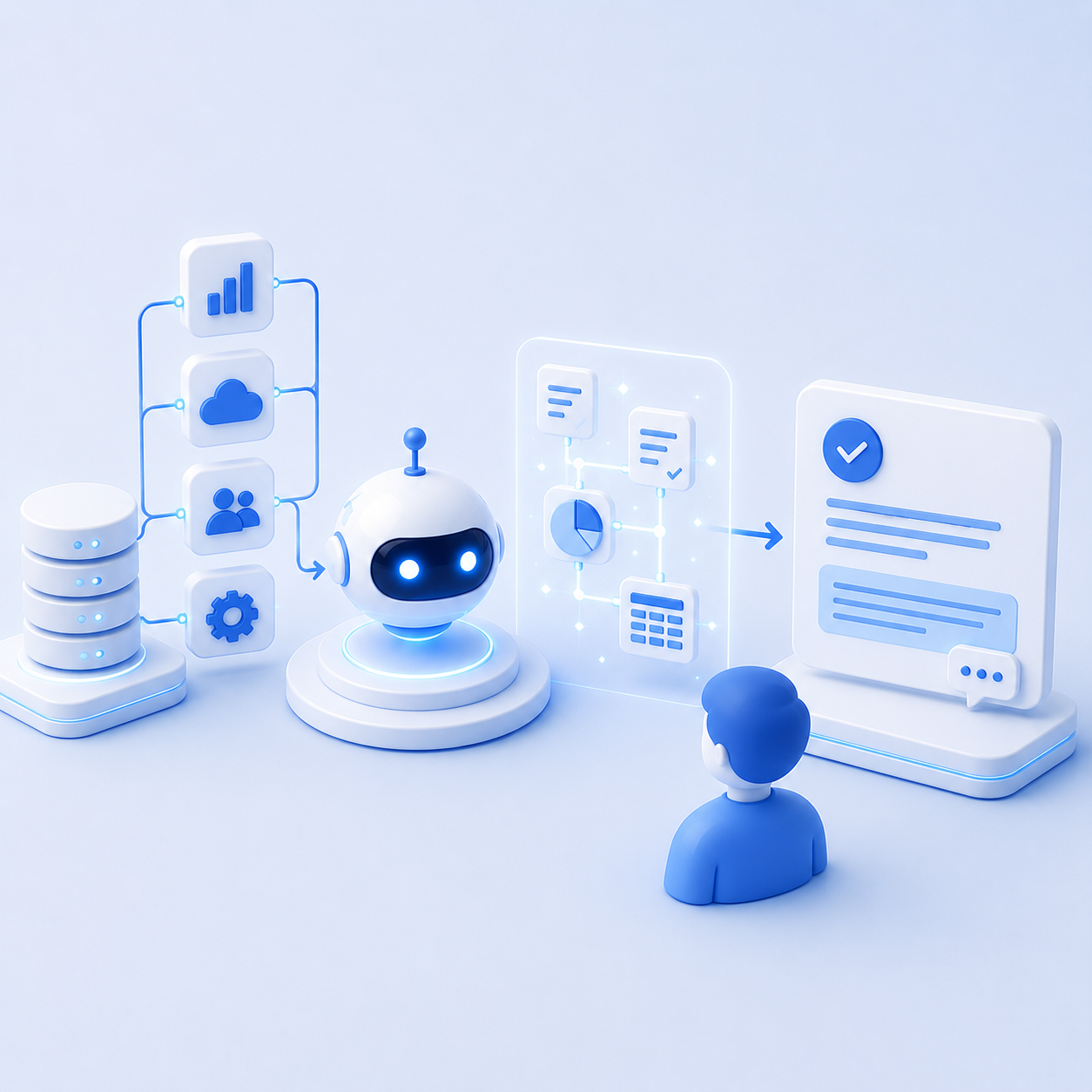
Before retrieving data, the system checks the employee’s permissions to ensure they only access information relevant to their role.
Building a single entry point across systems that were never designed to talk to each other raised a different set of problems than a typical chatbot build.
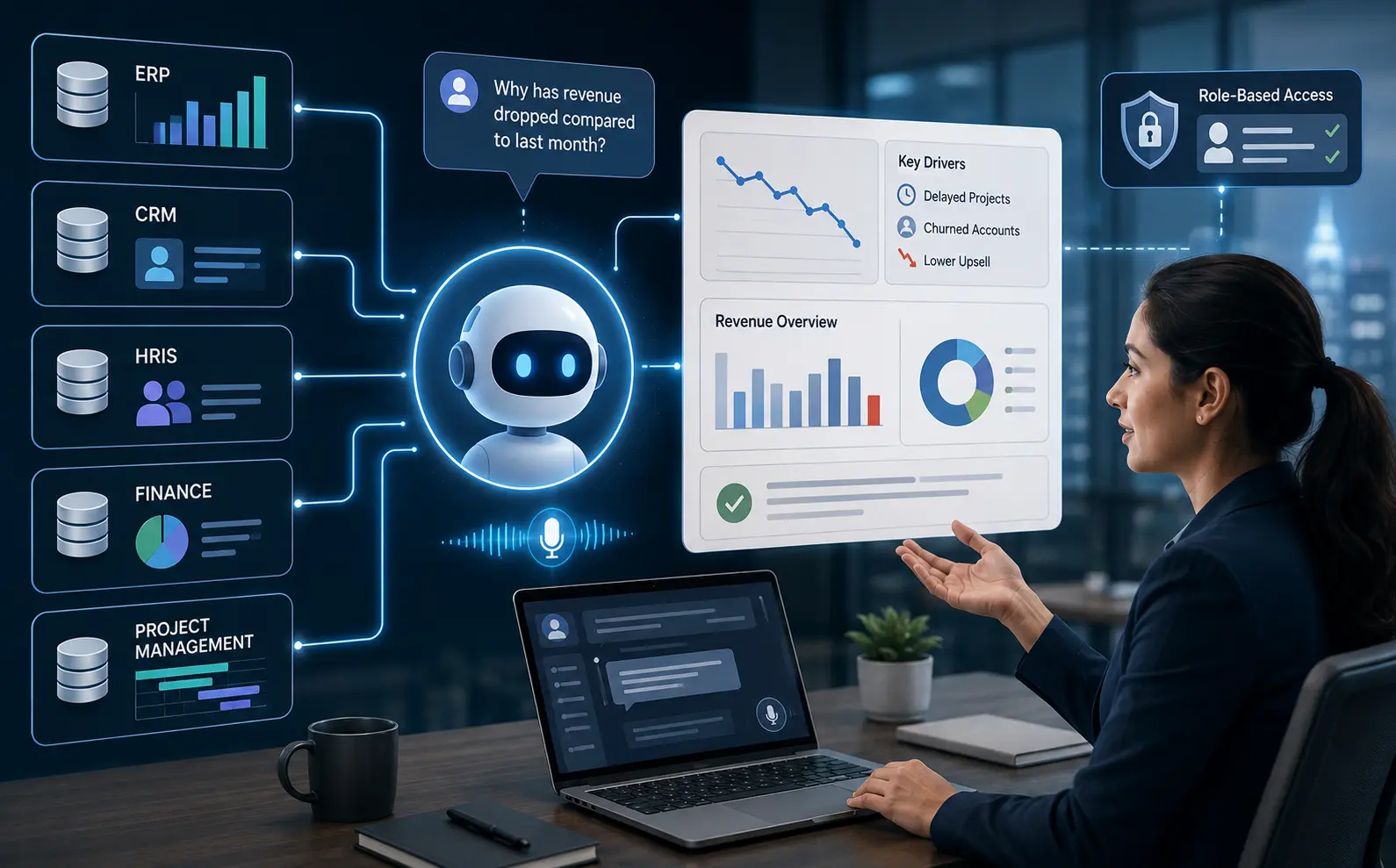
Getting a complete answer often meant knowing, in advance, which of four or five internal tools actually held the relevant data — knowledge that mostly lived with whoever set up that system.
We built an intent-routing layer that maps a plain-language question to the correct data source automatically, so the employee never has to know or choose.
A general-purpose model asked “what’s our revenue this month” will produce a plausible-sounding number that isn’t necessarily the real one.
We connected the query layer directly to governed enterprise data and tools rather than letting it answer from general knowledge, so every response is grounded in the company’s actual records.
A question like “why has revenue dropped compared to last month” needs numbers from one system and context — delayed projects, churned accounts — from another.
We designed the routing logic to query multiple systems for a single question and combine the results into one answer, instead of treating each system as an isolated lookup.
Rigid, keyword-triggered voice commands break the moment someone phrases a question slightly differently than expected.
We built the interface around natural conversational phrasing and follow-up questions, closer to how enterprise conversational-AI patterns handle open-ended requests than to a fixed voice-command menu.
Not every employee should be able to ask for and receive the same information; HR and financial data in particular need access boundaries.
We scoped responses to each employee’s existing access permissions, so the query layer answers within the same boundaries the underlying systems already enforce.
Employees can retrieve information that previously required checking multiple business applications through a single interaction.
Business information from ERP, CRM, HR, and reporting systems can be accessed through one interface.
Employees can find routine business information themselves instead of depending on colleagues to locate it.
Built the layer that interprets a spoken or typed question and identifies what’s actually being asked.
Connected the query layer to the ERP, CRM, HR, and reporting systems so questions are answered from real, governed data.
Built the logic to combine data from more than one system into a single, coherent answer for cross-functional questions.
Scoped every response to the employee’s existing permissions, keeping sensitive data inside its original access boundaries.
Hire dedicated developers & shape your business journey with our top-rated website & mobile app development services.