Key Takeaways
- AI is transforming photo editing by automating tasks such as retouching, background removal, color correction, lighting enhancement, and image optimization.
- AI photo editing software offers strong business potential, particularly across eCommerce, digital marketing, content creation, professional photography, and social media.
- Advanced AI features such as text-to-edit prompts, generative backgrounds, AI avatars, sky replacement, portrait enhancement, and batch processing can differentiate a modern editing platform.
- Automation improves productivity and consistency by reducing repetitive manual editing while maintaining high-quality visual output.
- Multiple monetization models can be used, including subscriptions, freemium plans, in-app purchases, advertising, and enterprise licensing.
- Development costs typically range from USD 80,000 to USD 200,000+, depending on AI complexity, platforms, processing requirements, and scalability.
- A scalable technology stack using React, Flutter, Python, OpenCV, PyTorch/TensorFlow, and cloud GPU infrastructure can support high-performance AI editing applications.
- Custom AI model development and optimization are major cost drivers, particularly for real-time inference, segmentation, facial analysis, and generative editing.
- Outsourcing to an experienced AI development team can help businesses accelerate development when specialized machine learning and image-processing expertise is required.
- The future of photo editing is increasingly AI-driven, making intelligent automation, scalability, and personalized editing important factors for businesses building next-generation visual platforms.
Photo editing software has evolved significantly, becoming an essential tool for photographers, designers, content creators, and businesses alike.
Modern photo editing solutions enable precise image retouching, color correction, background adjustments, layering, and advanced visual enhancements delivering high-quality visuals with greater efficiency than ever before.
These capabilities are especially valuable in sectors such as eCommerce, media, social platforms, and digital marketing, where compelling images directly drive engagement and results.
According to industry research, the global photo editing software market was valued at approximately USD 1.03 billion in 2024 and is projected to grow steadily to around USD 1.58 billion by 2034, at a CAGR of about 4.9 % over the forecast period, driven by rising mobile usage, content creation, and cloud-based tools adoption. (Global Growth Insights)
Why Build AI Photo Editing Software ?
Building AI photo editing software today offers significant business value because demand for smart visual tools is growing rapidly. The global photo editing software market is projected to expand strongly, with revenue expected to nearly double by 2032 thanks to rising demand for visually rich content and automation features.
Meanwhile, over 65% of new photo editing tools now include AI-powered functions such as background removal, auto-adjustment, and facial recognition, signaling how essential AI for photo editing has become in the industry.
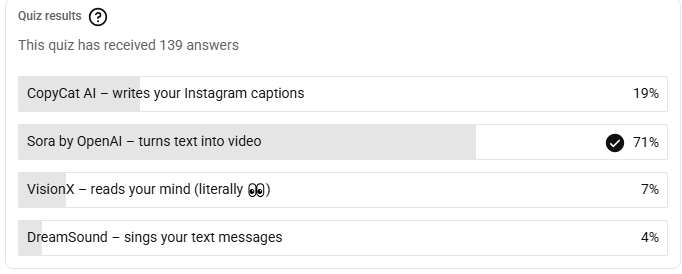
AI tools are becoming increasingly familiar to users. In a recent AleaIT Solutions quiz with 139 responses, 71% correctly identified Sora by OpenAI as a tool that turns text into video. The result highlights growing awareness of AI-powered visual content creation.
Use Cases of Photo Editing Software
- Content Creators & Influencers: Automate complex edits and apply professional-quality effects without manual expertise.
- E-commerce Platforms: Improve product imagery by standardizing look and feel, boosting click-through and conversions.
- Digital Marketing Teams: Enhance campaign visuals at scale with AI-driven enhancements like background replacement and automatic retouching.
- Professional Photographers: Streamline post-production workflows, allowing focus on creativity instead of manual tweaks.
In a world where AI for photo editing is rapidly becoming the norm not the exception developing such software positions your product to meet market expectations, unlock recurring revenue, and empower users with intelligent tools that traditional photo editing software can’t deliver at scale.
Key Features of Photo Editing Software
Modern photo editing software now integrates intelligent automation powered by machine learning and computer vision to enhance traditional editing workflows.
As the global photo editing software market continues to grow steadily and AI-based image tools witness 30%+ annual growth feature-rich editing platforms have become a core requirement for creators, professionals, and businesses seeking speed, quality, and scalability.
Core Photo Editing Features
These features form the foundation of any professional photo editing software:
- Edit Photos: Crop, resize, rotate, apply filters, and basic adjustments
- Color Temperature, Tone & Contrast: Automatic and manual color balancing
- Vibrancy & Saturation: Intelligent color enhancement for natural-looking images
- Remove Spots & Blemishes: AI-assisted object and imperfection removal
These capabilities ensure usability for beginners while maintaining precision for advanced users in AI photo editing workflows.
Advanced AI-Powered Features
Advanced features differentiate standard tools from scalable AI photo editing software:
- AI Template Suggestions: Context-aware presets generated using image analysis
- Smart Catalog & Document Management: AI-driven image tagging, sorting, and search
- Lighting Control & Enhancement: Automatic exposure and shadow optimization
- Sky Replacement & Atmosphere Change: Semantic segmentation for realistic edits
- Super Contrast: AI-powered detail enhancement without quality loss
- Portrait Bokeh & Eye Enhancer: Face and depth detection for professional portraits
- Batch Processing: High-volume automated editing for enterprise use cases
- AI Avatar & Style Generation: Generative AI for personalized avatars, artistic transformations, and style-based image creation.
- Text-to-Edit Prompts: Natural-language commands for editing objects, colors, clothing, backgrounds, and other image elements.
- Generative Background Creation: AI-generated backgrounds tailored to the subject, lighting, perspective, and desired visual context.
As demand for faster content production grows especially in eCommerce and digital marketing businesses increasingly prefer AI editing software that reduces manual effort while delivering consistent, high-quality results at scale.
Benefits of AI Photo Editing Software for Businesses
AI photo editing software, a key offering in our custom software development services, helps businesses move beyond manual editing by introducing intelligent automation and consistency.
As visual content demand grows, our AI-driven editing solutions enable faster production without compromising quality, empowering businesses to scale efficiently and deliver stunning visuals.
- Faster Editing & Automation: AI automates repetitive tasks like background removal, color correction, and enhancements, significantly reducing editing time and improving workflow efficiency.
- Smarter Error Correction & Consistency: AI detects and corrects lighting issues, color imbalances, and imperfections automatically, ensuring uniform, high-quality output with minimal rework.
- Higher Productivity & Revenue Impact: Faster turnaround and improved image quality boost engagement and conversions, with high-quality visuals proven to increase online sales by up to 30%.
By combining speed, accuracy, and scalability, AI photo editing software becomes a strategic tool for businesses aiming to grow efficiently and stay competitive.
Yes. Since this section is being expanded from the existing FAQ, I’d make it more detailed and business-focused while keeping it consistent with the article’s tone. The current FAQ already identifies subscription, freemium, in-app purchases, and enterprise licensing as monetization options.
Monetization Models for AI Photo Editing Software
Choosing the right monetization strategy is essential for turning an AI photo editing software product into a sustainable business. Depending on the target audience, feature complexity, and processing costs, businesses can combine multiple revenue models to maximize user acquisition and recurring revenue.
1. Subscription Model
Offer monthly or annual premium plans that provide access to advanced AI editing capabilities, higher processing limits, cloud storage, batch processing, and premium creative tools. Subscription pricing works particularly well for professional photographers, content creators, marketing teams, and businesses that use the platform regularly.
2. Freemium Model
Provide essential editing tools for free while placing advanced AI capabilities behind a paid plan. Users can try features such as basic retouching, cropping, filters, and limited AI enhancements before upgrading to access premium functionality such as generative editing, AI avatars, background generation, and high-resolution exports.
3. In-App Purchases
Allow users to purchase individual premium features, creative packs, filters, effects, templates, AI avatars, or additional processing credits. This model is particularly suitable for mobile-focused photo editing applications where users may prefer paying for specific tools rather than committing to a recurring subscription.
4. Advertising-Supported Model
Offer a free version supported by advertisements while providing an ad-free experience to premium subscribers. Ads can generate revenue from users who do not want to purchase a subscription, while premium plans can remove advertisements and unlock additional AI editing capabilities.
5. Enterprise Licensing
For eCommerce brands, marketing agencies, media companies, and other organizations processing images at scale, offer customized enterprise plans with bulk processing, API access, dedicated infrastructure, advanced security, team collaboration, and usage-based pricing. This can create a higher-value revenue stream alongside individual subscriptions.
How to Develop AI Photo Editing Software
Developing AI photo editing software requires a combination of scalable architecture, optimized image-processing pipelines, and advanced machine learning models.
Unlike traditional photo editing software or basic picture editing software, AI-driven solutions must handle high-resolution images, real-time inference, and GPU-intensive workloads making architecture, cost planning, and understanding software development cost essential.
1. Market Research & Requirement Analysis
Define technical and functional requirements based on user needs for professional photo editing software, photography editing software, and AI photo editing software. Prioritize features (MVP vs advanced), platform selection (web, desktop, mobile), and performance benchmarks.
Estimated Cost: USD 5,000 – 10,000
Outputs: Product roadmap, feature list, AI feasibility study
2. Wireframing & UI/UX Design
Design intuitive workflows for AI-driven editing, including one-click enhancements and real-time previews. UI must support complex tools while ensuring usability for both beginners and advanced users of AI editing software.
Estimated Cost: USD 8,000 – 15,000
Outputs: Wireframes, interactive prototypes, UX guidelines
3. Choosing the Right Tech Stack & Team
Typical tech stack for AI for photo editing:
- Frontend: React, Flutter, Swift, Kotlin
- Backend: Node.js, Python (FastAPI), Go
- Image Processing: OpenCV, Pillow
- AI/ML: TensorFlow, PyTorch, ONNX
- Infrastructure: AWS/GCP with GPU instances
Cross-functional teams ensure scalable, enterprise-ready photo editing software.
Estimated Cost: USD 15,000 – 25,000
4. AI Model Development & Integration
Train and optimize models for face detection, segmentation, color correction, depth estimation, and style transfer. Real-time processing and high accuracy are critical for AI photo editing software and image editing software.
Estimated Cost: USD 30,000 – 70,000
Cost Drivers: Custom vs pre-trained models, GPU usage, real-time inference
Photo Editing Software Development
Develop core editing capabilities: crop, resize, filters, batch processing, and AI-powered enhancements. Optimize memory usage and performance for high-resolution picture editing software and AI editing software.
Estimated Cost: USD 25,000 – 50,000
Focus Areas: Performance optimization, scalability, cross-platform support
5. Testing, QA & Deployment
Conduct rigorous testing for accuracy, rendering quality, load handling, and cross-device compatibility. Deploy using CI/CD pipelines with GPU scaling and monitoring, ensuring stable professional photo editing software.
Estimated Cost: USD 8,000 – 15,000
Outputs: Stable release, cloud deployment, monitoring setup
|
Total Estimated Cost to Build AI Photo Editing Software |
|
|
Version |
Estimated Cost |
|
MVP Version |
USD 80,000 – 120,000 |
| Advanced Version
|
USD 130,000 – 200,000+
|
Costs depend on AI complexity, platform coverage, real-time processing requirements, and scalability for AI photo editing, photography editing software, and enterprise-level photo editing software.

Conclusion
Developing AI photo editing software is a strategic investment for businesses and creators looking to stay ahead in the fast-evolving digital landscape.
As the global photo editing software market continues to expand and AI-driven tools gain momentum in eCommerce, content creation, and digital marketing, leveraging AI for photo editing offers a powerful edge.
By partnering with a reputable AI software development company, you can ensure your solution is not only efficient and accurate but also scalable and future-ready, delivering high-quality results with minimal effort.
Frequently Asked Questions
The cost ranges from USD 80,000 to 200,000+, depending on AI complexity, platform coverage, and advanced features. Enterprise-grade professional photo editing software costs more due to GPU usage, real-time AI processing, and scalability requirements.
Key features include core edits (crop, resize, filters), color correction, tone & contrast, AI template suggestions, batch processing, lighting control, sky replacement, portrait enhancements, and smart catalog management.
Common models include subscription plans, freemium access, in-app purchases for advanced AI features, and enterprise licensing for photography editing software or image editing software solutions.
For complex AI photo editing software requiring deep learning expertise, outsourcing to a specialized team is often faster and cost-effective. In-house development works if you have strong AI and image-processing capabilities.
AI editing software automates enhancements using machine learning models, reducing manual effort and increasing speed, while traditional photo editing software relies heavily on manual adjustments.
E-commerce, digital marketing, content creation, professional photography, and social media management are the primary beneficiaries, as AI helps improve efficiency, image quality, and engagement.
Yes, most modern AI photo editing software supports automated batch processing, allowing high-volume image editing with minimal manual effort.