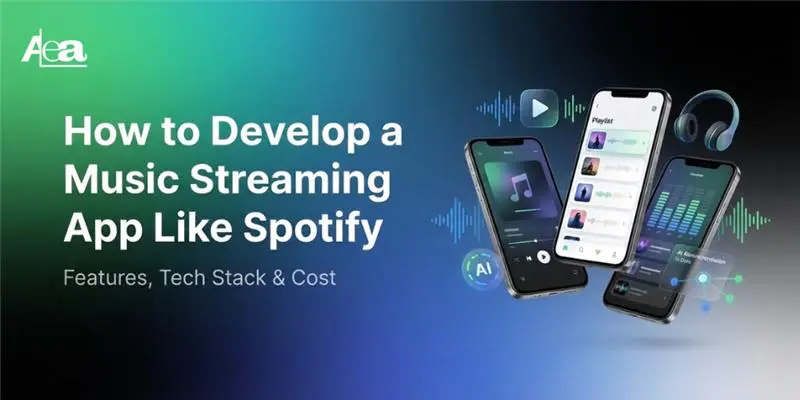
Music streaming apps have become the most popular way for users to listen to their favorite songs anytime and anywhere. A well-designed streaming app allows users to access massive music libraries, create playlists, and enjoy personalized recommendations. Platforms like Spotify have played a major role in shaping how people consume music in the digital age.
To develop app solutions like Spotify, businesses must focus on both technology and user experience. Building a successful music streaming app involves integrating secure streaming technology, designing an intuitive interface, and ensuring smooth performance across devices. With the growing demand for music streaming apps, investing in a feature-rich streaming app can help businesses attract users, increase engagement, and achieve long-term growth.
Market Growth Driving Music Streaming App Development
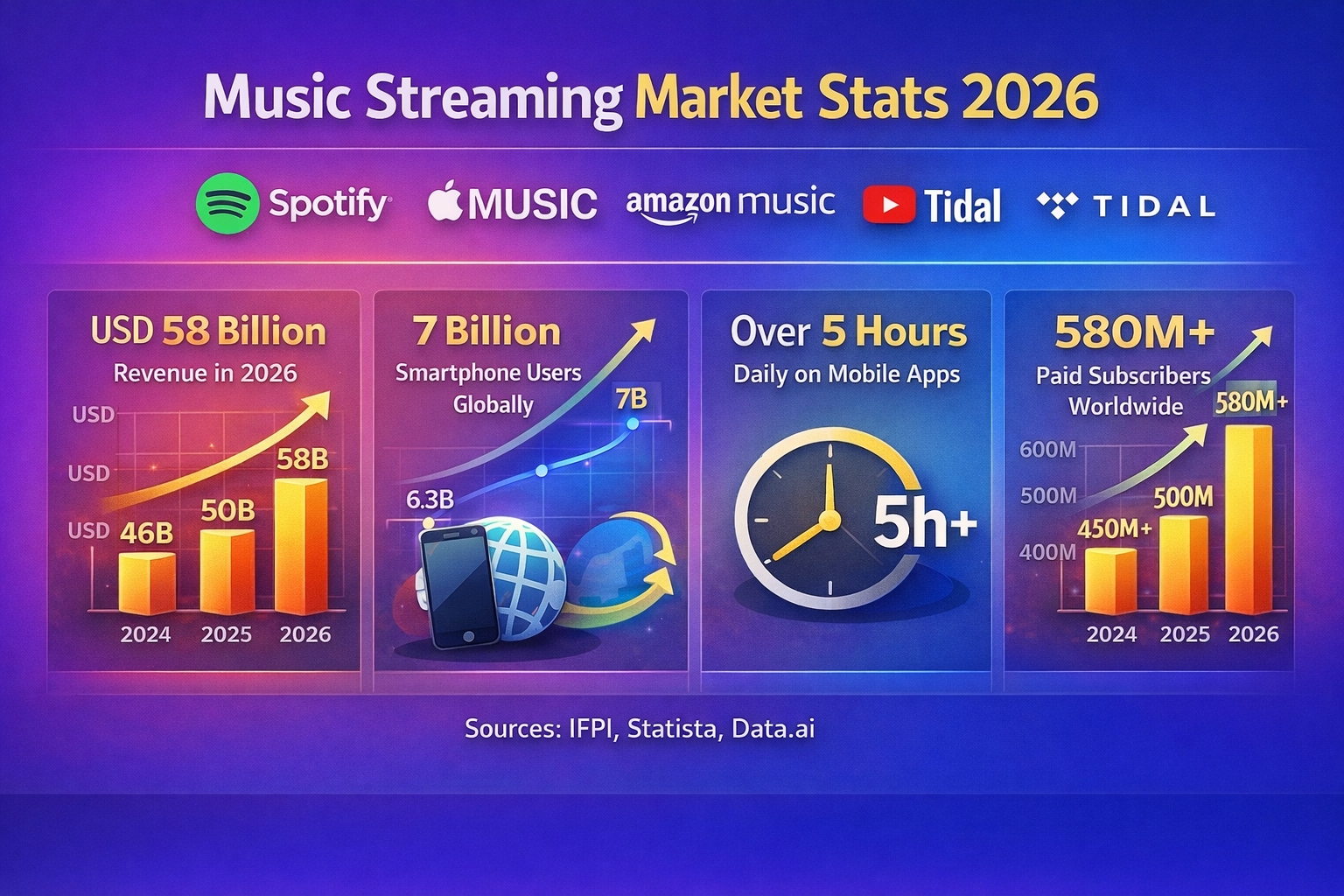
The global mobile application market size continues to grow rapidly, fueled by widespread digital adoption. Global mobile app revenue exceeded USD 530 billion in 2024 and is expected to reach nearly USD 585 billion by 2025, highlighting consistent market expansion (Statista). Within this landscape, music streaming apps have emerged as one of the fastest-growing digital products.
In 2024, the global music streaming market generated over USD 46 billion in revenue, supported by the increasing shift toward on-demand audio consumption (IFPI Global Music Report). Growth is further driven by rising smartphone usage, affordable data plans, and evolving entertainment preferences.
As per recent Mobile App Statistics, there are more than 6.3 billion smartphone users globally, with users spending over 5 hours per day on mobile applications (Data.ai). Entertainment and audio platforms represent a significant portion of this engagement.
Types of Music Streaming Apps
There are several types of music streaming apps, each designed to meet specific user expectations and business objectives. When planning to develop app solutions, selecting the appropriate model is essential, as it influences features, licensing requirements, scalability, and overall app development cost. Below are the major types, with estimated costs and how they differ in purpose and implementation:
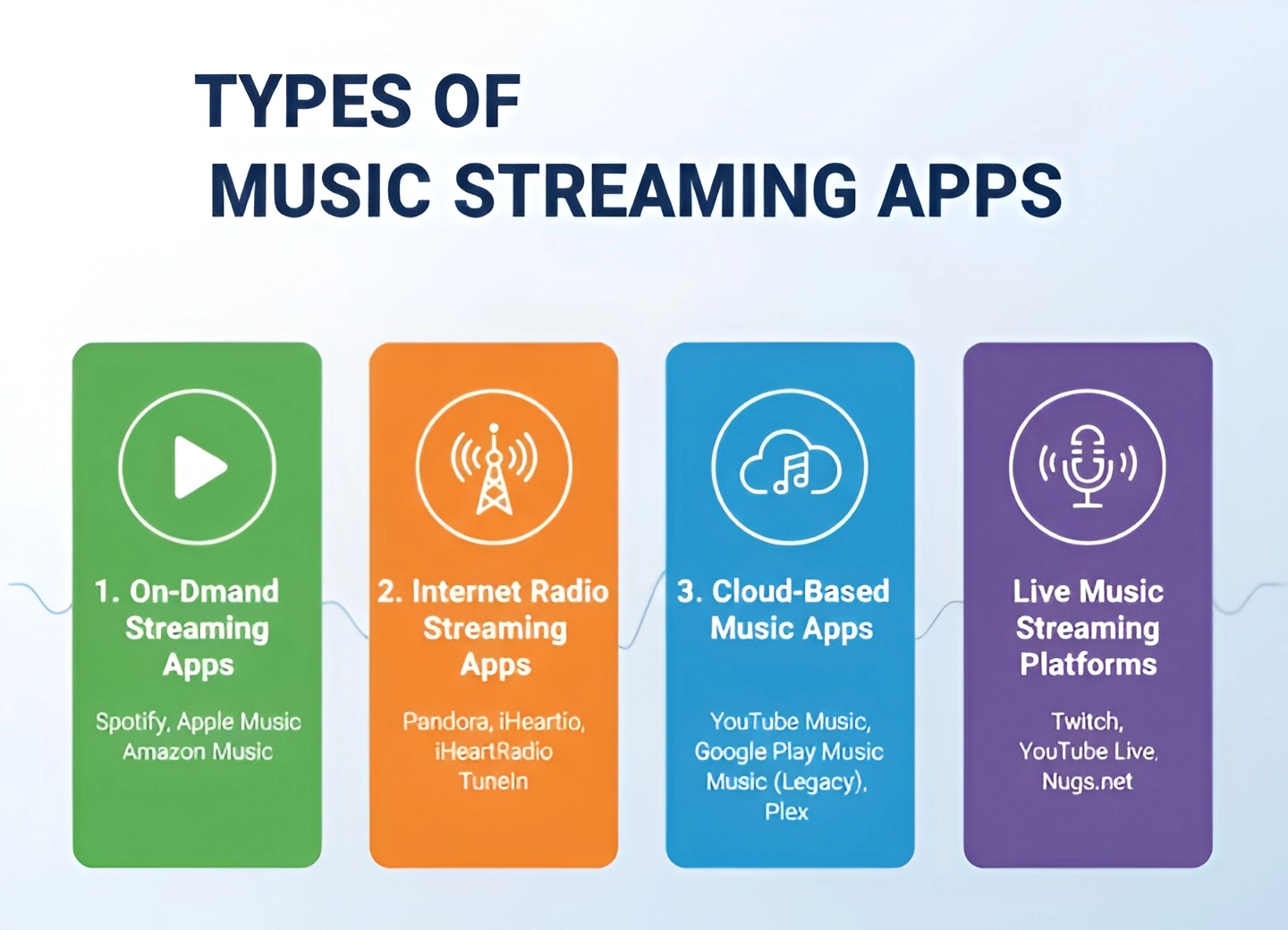
1. On-Demand Streaming Apps
These apps let users play songs, albums, or playlists instantly, with features like personalized recommendations, advanced search, and offline listening. On-demand app development companies can help you create a seamless, user-friendly platform that meets the growing demand for personalized audio experiences.
Cost Estimate:
- Basic On-Demand App: $40,000 – $80,000
- Mid-Level with Personalization & AI: $80,000 – $150,000
- Full-Featured Customized Platform: $150,000+
Key Points:
- Requires robust backend infrastructure to handle large libraries.
- Heavy investment in recommendation algorithms improves engagement.
- Licensing costs can be significant due to extensive music catalogs.
2. Internet Radio Streaming Apps
Internet radio apps stream curated channels or genre-based content, often using automated playlists shaped around moods, themes, or genres rather than on-demand selection.
Cost Estimate:
- Basic Radio Streaming App: $30,000 – $60,000
- Enhanced with Personalization or User Channels: $60,000 – $120,000
- Lower backend cost than on-demand apps since they don’t require complex catalog queries.
- Still require licensing for continuous streaming categories.
- Great for users who prefer passive listening experiences.
3. Cloud-Based Music Apps
Cloud-based music apps allow users to upload and store their own music files in a cloud library, then stream from any device. This type focuses more on personal collections rather than large public libraries.
Cost Estimate:
- Basic Cloud Music App: $35,000 – $70,000
- Scalable Cloud Storage & Sync Features: $70,000 – $130,000
- Lower content licensing burden because the music comes from users.
- Costs focus on cloud storage, syncing, and secure streaming.
- Good option for niche audiences or platforms targeting user-owned content.
4. Live Music Streaming Platforms
Live streaming apps focus on broadcasting real-time performances, DJ sets, concerts, or interactive live sessions. These platforms are trending as artists increasingly engage with audiences directly.
Cost Estimate:
- Basic Live Streaming App: $50,000 – $100,000
- Enhanced with Chat & Ticketing Features: $100,000 – $200,000+
- Requires real-time encoding, low-latency delivery, and quality control.
- Higher cost due to complex live infrastructure.
- Monetization can include virtual tipping, ticket sales, or exclusive content.
Below is the expanded version, with each heading close to ~200 words, written in a professional blog tone, and with all keywords preserved exactly as given (no disturbance or overuse).
Monetization Strategies
Successful music streaming apps rely on diverse monetization strategies to ensure long-term profitability and business sustainability. Selecting the right revenue model is crucial during the planning phase, as it directly impacts user acquisition, engagement, and overall app development cost. A balanced monetization approach allows a streaming app to attract free users while gradually converting them into paying customers.
Common monetization strategies include:
- Subscription-based plans, offering ad-free listening, offline downloads, and premium audio quality
- In-app advertisements, such as audio ads, banner ads, and video ads for free users
- Premium feature upgrades, including exclusive playlists or early access to content
- Sponsored playlists and content, created in partnership with brands or artists
- Brand collaborations, enabling co-marketing and sponsored experiences
Choosing the right combination of these strategies during development helps businesses manage operational expenses while generating consistent revenue. When companies develop app solutions with flexible monetization models, they can easily adapt to market changes and user preferences, ensuring sustainable growth for their music streaming apps.
Key Features Of Music Streaming App
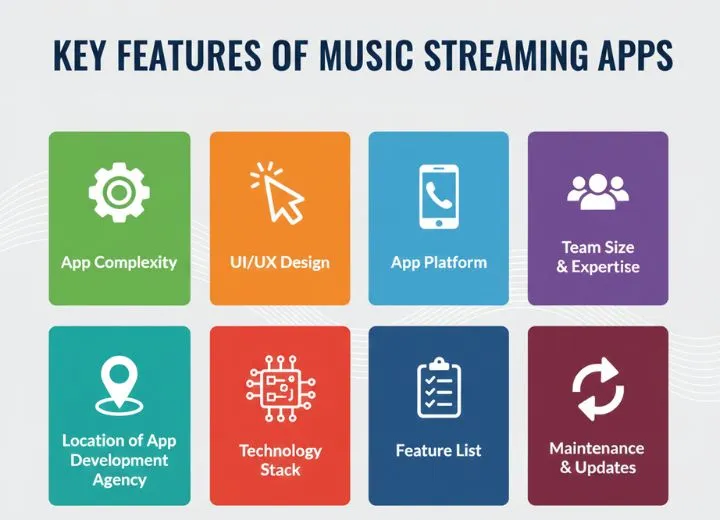
1. App Complexity
The level of complexity directly affects development cost. Basic music streaming apps with standard playback features cost less, while advanced apps with AI recommendations, offline mode, and social sharing require more development time and higher investment.
2. UI/UX Design
A user-friendly and visually appealing design improves engagement but increases cost. Custom animations, intuitive navigation, and user testing add to the overall development budget.
3. App Platform
Developing a music streaming app for a single platform (Android or iOS) is more cost-effective. Cross-platform or multi-platform development increases time, resources, and cost.
4. Team Size & Expertise
A larger and more experienced development team—including developers, designers, QA engineers, and project managers—ensures quality but raises development expenses.
5. Location of App Development Agency
Development costs vary by region. Agencies in North America and Europe generally charge higher rates compared to offshore development teams.
6. Technology Stack
The choice of programming languages, frameworks, cloud services, and third-party integrations impacts scalability, performance, and overall cost.
7. Feature List
Additional features such as offline downloads, AI-based recommendations, push notifications, and social sharing significantly influence development cost.
8. Maintenance & Updates
Ongoing maintenance, security updates, bug fixes, and feature enhancements are recurring costs that must be planned for long-term app success.
Development Process
The process to develop app solutions for music streaming apps involves multiple structured stages to ensure quality, scalability, and performance. It begins with market research and requirement analysis to identify user needs and competitive benchmarks. This is followed by UI/UX design, where intuitive layouts and smooth navigation are planned.
The development phase includes frontend and backend implementation, database setup, and third-party integrations. After development, rigorous testing ensures the streaming app functions smoothly across devices and platforms. Finally, deployment and post-launch support prepare the app for real-world usage.
Partnering with experienced mobile app developers ensures the development process remains efficient and secure. A well-planned process reduces technical risks, controls costs, and helps deliver high-quality music streaming apps.
Top Tools and Technologies for Developing a Music Streaming Platform
A strong technology stack is essential for ensuring smooth performance and scalability in music streaming apps. The choice of technologies directly impacts app speed, security, and future expansion capabilities.
Category |
Technologies |
| Frontend | React Native, Flutter, Swift, Kotlin, HTML5, CSS3, JavaScript, Vue.js, React.js |
| Backend | Node.js, Python (Django/Flask), Ruby on Rails, Java |
| Databases | MySQL, MongoDB, PostgreSQL, Firebase |
| Cloud Services | AWS, Google Cloud Platform (GCP), Microsoft Azure, S3 (AWS) |
| Audio Streaming | HLS, RTMP, WebRTC, FFmpeg |
| Content Delivery | CDN, Edge Computing |
| Authentication & Security | OAuth, JWT, SSL/TLS Encryption, 2FA |
| AI & Personalization | TensorFlow, PyTorch, Google Cloud AI, AWS AI |
| Analytics & Monitoring | Google Analytics, Mixpanel, Crashlytics, Datadog |
| Payment Gateways | Stripe, PayPal, Razorpay, Braintree |
| CI/CD & DevOps | Jenkins, GitLab CI, Docker, Kubernetes, Terraform |
These technologies enable real-time streaming, personalized content delivery, and efficient data handling. Selecting the right stack during development minimizes technical issues and supports long-term growth.
When businesses develop app solutions using modern and scalable technologies, partnering with an AI mobile app development company ensures the creation of reliable and future-ready streaming app platforms.
Cost to Develop a Music Streaming App
The cost to develop app solutions for music streaming depends on complexity, features, and platform selection. A basic music streaming app with standard functionality may cost between USD 30,000 to USD 60,000, while a feature-rich platform with advanced personalization, offline mode, and high traffic handling can range from USD 80,000 to USD 150,000 or more.
Factors influencing cost include UI/UX design, backend infrastructure, third-party integrations, licensing compliance, and ongoing maintenance. Partnering with experienced mobile app companies helps optimize development costs while ensuring scalability, security, and performance.
Businesses planning to develop app solutions should balance budget constraints with long-term scalability to maximize returns from their streaming app investment.
Future Trends in Music Streaming App
Emerging technologies are shaping the future of music streaming apps and redefining user experiences. These advancements reflect broader app development trends toward automation and decentralization, ensuring that the next generation of audio platforms is more secure, scalable, and tailored to individual tastes.”
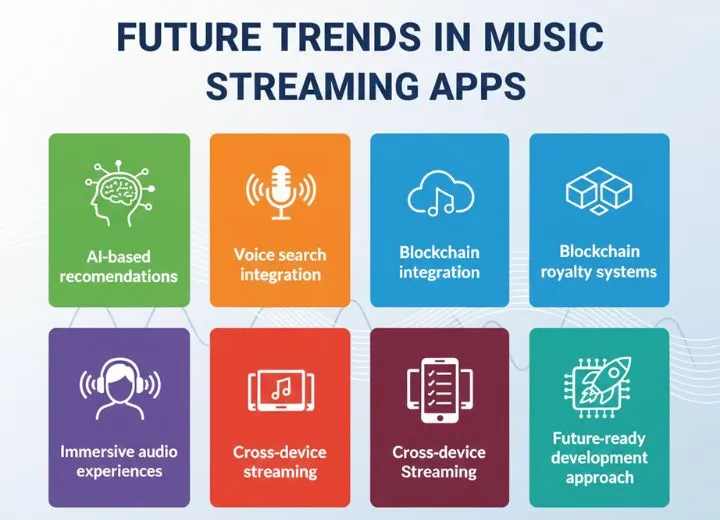
- AI-based recommendations – Advanced algorithms analyze listening behavior to offer personalized song and playlist suggestions, increasing user engagement.
- Voice search integration – Voice-enabled features allow users to search and control music hands-free, improving accessibility and convenience.
- Blockchain royalty systems – Blockchain technology enhances transparency in royalty payments, ensuring fair and timely compensation for artists.
- Immersive audio experiences – Technologies such as spatial and high-resolution audio provide richer and more engaging listening experiences.
- Cross-device streaming – Seamless playback across smartphones, smart speakers, and wearables enhances the overall streaming app experience.
- Future-ready development approach – Businesses that develop app solutions aligned with these trends can stay competitive and deliver innovative music streaming apps.
Why Choose AleaIT Solution
AleaIT Solution provides reliable mobile app development services for businesses seeking high-quality music streaming apps. With skilled professionals, industry expertise, and a structured development approach, AleaIT helps brands develop app platforms that are scalable, secure, and engaging. Their solutions focus on performance, user experience, and long-term growth.
The rapid growth of music streaming apps highlights the increasing demand for on-demand digital entertainment, making Media & Entertainment App Development more crucial than ever. With proper planning, licensing compliance, and the right development partner, businesses can successfully develop app solutions that stand out in the competitive streaming app market.
FAQs
1. How long does it take to build a music streaming app?
The development timeline for a music streaming app can vary depending on the complexity, features, and platform(s) involved. A basic app with core features like user registration, music playback, and playlists can take around 3 to 6 months. More advanced apps with features like social sharing, personalized recommendations, offline playback, and multi-platform support can take 9 months or longer. Additionally, time is needed for testing, licensing arrangements, and deployment.
2. How can music streaming apps generate revenue?
There are several common revenue streams for music streaming apps:
- Subscription Models: Charging users a monthly or yearly fee for ad-free and premium features.
- Ad-Supported Free Tier: Offering free access with ads placed between songs or in the app interface.
- In-App Purchases: Selling features like exclusive content, downloads, or merchandise.
- Partnerships and Sponsorships: Collaborating with brands for sponsored playlists or events.
- Data Monetization: Analyzing user preferences to provide market insights (with user consent).
3. What key features should a successful music streaming app include?
Successful music streaming apps typically include:
- User-friendly Interface: Easy navigation, search, and playlist creation.
- High-Quality Audio Streaming: Support for multiple bitrates and offline playback.
- Personalized Recommendations: Algorithms that suggest music based on listening habits.
- Social Sharing: Integration with social media platforms to share songs and playlists.
- Cross-Platform Support: Availability on mobile, desktop, and smart devices.
- Robust Search and Discovery: Access to a large music library and curated content.
5. What challenges do developers face when building music streaming apps?
Developers encounter several challenges, including:
- Licensing Complexity: Navigating different laws and agreements worldwide.
- Scalability: Handling large volumes of users and streaming data smoothly.
- Content Management: Organizing and updating an extensive music library.
- Latency and Streaming Quality: Ensuring smooth playback without buffering.
- Security: Protecting user data and preventing unauthorized access to content.
- Competition: Differentiating the app in a crowded market with established players.